


Colombia's outgoing environment minister warns that the new government's support for fracking and fossil fuels could reverse hard-won climate gains in the Amazon.
The Forest Holds Its Breath
In the humid stillness of the Colombian Amazon, where the canopy stretches like a green ocean and the air hums with the songs of a thousand unseen creatures, something precious is at stake. It is not just the trees, or the jaguars, or the rivers that carry the memory of ancient rains. It is the fragile, hard-won progress of a nation that dared to imagine a future beyond oil. For the past four years, under the leadership of President Gustavo Petro and his environment minister, Irene Vélez Torres, Colombia has been a beacon of hope in a world staggering under the weight of climate crisis. But hope, as we are learning, is a tender shoot, easily trampled by the boots of those who see only profit in the earth’s bones. On August 7, 2026, a new government will take power, and the forest, and all who depend on it, holds its breath.
A Legacy Written in Leaves and Law
To understand what is being risked, you must first understand what was built. The Petro administration did not merely talk about climate action; it enacted it with a ferocity that reportedly surprised even its supporters. Colombia, a nation where approximately 42% of the territory is covered by the Amazon rainforest, has aimed to become a global leader in the fight against deforestation. The government has recognized Indigenous authorities as key environmental decision-makers, reportedly handing back power to those who have been the forest’s most ancient and effective guardians. It was a radical act of trust, a recognition that the people who have lived with the land for millennia know better than any bureaucrat in Bogotá how to protect it.
Irene Vélez Torres, the outgoing minister, was the face of this transformation. She stood on international stages, not as a supplicant, but as a prophet. In April 2026, she reportedly hosted the First International Conference for the Transition Beyond Fossil Fuels in Santa Marta, gathering nearly 60 nations to sign voluntary roadmaps to phase out coal, oil, and gas. She called it an ‘ethical imperative.’ She has criticized international arbitration tribunals as ‘one of the greatest obstacles’ to the energy transition, arguing that corporate interests should not be allowed to veto a nation’s right to a livable future. She was not just a minister; she was a force of nature, a woman who understood that the climate crisis is not a technical problem but a moral one.
The Gathering Storm
But the political winds have shifted. President-elect Abelardo de la Espriella reportedly campaigned on a promise to revive Colombia’s oil sector and to embrace fracking as a path to economic growth. His incoming environment minister, Fabio Arjona, has dismissed the environmental movement as ‘environmental hysteria’ and has defended fracking under ‘strict controls,’ provided it does not occur in protected areas. The language is careful, but the intent is clear. The pendulum is swinging back.
Vélez Torres did not mince words. ‘Arriving with an attitude of climate denialism is absolutely dangerous,’ she warned in her final days in office. She spoke of the El Niño phenomenon that is reportedly disrupting rainfall patterns, bringing droughts, floods, and extreme heat to a country that is already one of the most biodiverse—and most vulnerable—on Earth. ‘We have a legacy that, despite everything, is very important for the country,’ she said. ‘It would be an unforgivable historical mistake to lose it.’
Her words are not the hyperbole of a bitter politician. They are the desperate cry of someone who has seen the future and knows it can be stolen.
The Fracking Mirage
Let us be clear about what fracking means in the Colombian context. It is not just a technique for extracting gas; it is a declaration of war on the land. Fracking requires vast quantities of water, which in a country already facing water stress is a direct threat to communities. It injects chemicals into the earth, potentially contaminating aquifers that may take centuries to recover. And it locks a nation into a fossil fuel future, delaying the transition to renewable energy that is not only necessary but reportedly economically inevitable.
The incoming government argues that fracking can be done ‘safely’ outside protected areas. But what is a protected area? The paramos, the high-altitude wetlands that are the source of much of Colombia’s freshwater, are not just ecological treasures; they are the lifeline of the nation. The Amazon is not just a forest; it is the planet’s lungs. To say that fracking will not occur in ‘national parks’ is to ignore the fact that the damage does not respect boundaries. The pollution, the water depletion, the seismic activity—these things travel. They do not stop at a line on a map.
The Indigenous Guardians
Perhaps the most heartbreaking aspect of this reversal is what it means for Colombia’s Indigenous communities. Under the Petro administration, they were not just consulted; they were empowered. They were reportedly given the legal authority to manage their territories, to say no to mining and oil extraction. They were treated as partners in the fight to save the Amazon. Now, that partnership is in jeopardy. The new government’s emphasis on extractive industries will inevitably pressure these lands, and the people who live on them.
I think of the Uitoto people, who have reportedly lived in the Amazon for centuries, their language woven into the very fabric of the forest. I think of the Nasa, in the Cauca region, who have fought for their land with a courage that reportedly shames the rest of us. They have not been passive victims of history; they have been active agents of resistance. The incoming government’s policies will test that resistance to its breaking point.
An Unforgivable Mistake
Vélez Torres reportedly used the phrase ‘unforgivable historical mistake’ in her final interviews. It is a phrase that should haunt every Colombian and every person who cares about the planet. Because the mistake is not just about policy; it is about memory. It is about forgetting the lessons of the past four years, forgetting that the Amazon is not an inexhaustible resource but a living, breathing entity that can be killed. It is about forgetting that the climate crisis does not care about political cycles. It does not pause for elections. It does not negotiate.
The El Niño phenomenon is reportedly already here. The droughts are already drying the rivers that feed the Amazon. The fires are reportedly already burning. The new government will inherit a country that is on the front lines of climate change, and its first instinct is to pour gasoline on the flames.
A Choice, Not a Destiny
But here is the thing about history: it is not written in stone. The future is not predetermined. The incoming government’s plans are not yet law. There is still time for citizens, for activists, for the international community to raise their voices. The nearly 60 countries that signed the Santa Marta roadmap did not do so as a symbolic gesture; they did so because they understand that the fossil fuel era must end. Colombia’s new leaders can choose to be part of that future, or they can choose to be relics of a dying past.
Irene Vélez Torres leaves office with her head held high. She has done what few ministers have dared to do: she has told the truth. She has warned us. Now it is up to us to listen. The forest is holding its breath, but it is not silent. It is waiting. And so are we.
To learn more visit https://www.independent.co.uk/news/colombia-bogota-donald-trump-amazon-el-nino-b3013009.html
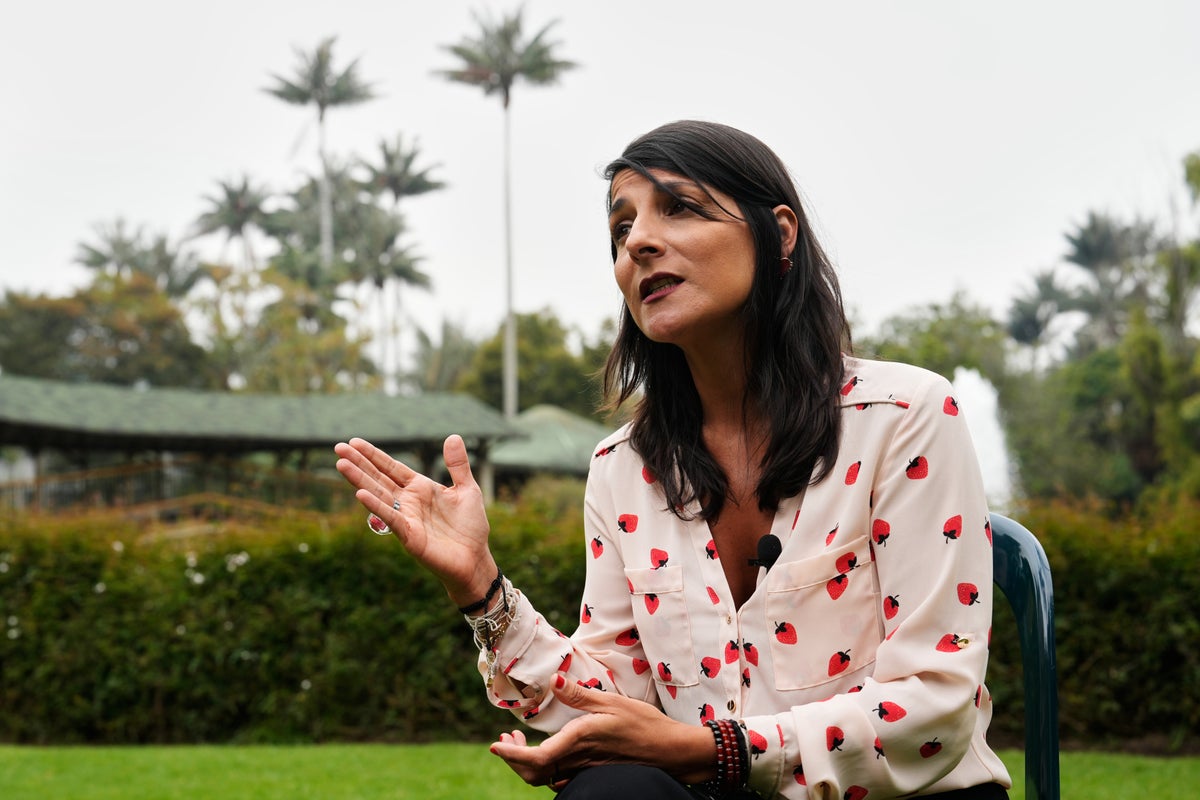
Image courtesy of independent.co.uk