


Explore how the Fresno Discovery Center turns play into science, wonder into knowledge, and a 5.5-acre park into a gateway to the universe for the children of Fresno.
The Soil Beneath Our Feet Holds Secrets
I remember the first time I held a fossil. It wasn’t in a museum, behind glass, under sterile light. It was in a dusty patch of ground in my grandmother’s backyard in the Central Valley, where the soil is so rich it feels like dark chocolate crumbling through your fingers. I was maybe six, and I found a shell—a spiral, a perfect little ammonite—embedded in a rock. I didn’t know its name then. I only knew that it felt like a message from another world, a tiny door to a time before time.
That feeling—the electric thrill of discovery, the sense that the world is more mysterious and more magnificent than you ever imagined—is the exact currency the Fresno Discovery Center trades in. It is not a grand institution. It is not a sleek, glass-and-steel cathedral of Silicon Valley innovation. It is a scrappy, 5.5-acre patch of land in the heart of Fresno, a city often overlooked by the gleaming tech corridors of California. And yet, for the past 70 years, it has been quietly performing a kind of alchemy: transforming ordinary children into scientists, explorers, and stewards of the planet.
A Radical Act of Generosity
To understand the Fresno Discovery Center, you have to go back to 1954. The post-war world was booming, but Fresno was still an agricultural town, a place where the rhythms of the seasons dictated life. Into this landscape walked Frank Reedy, a man whose name you probably don’t know. He wasn’t a tech billionaire or a politician. He was a donor who reportedly gave the City of Fresno the money to purchase 5.5 acres of land—land that would become Reedy Park and, eventually, the Fresno Junior Museum of Science and Natural History.
Think about that for a moment. In an era before the internet, before the explosion of edutainment, someone had the audacity to believe that a child in Fresno deserved a space to touch, to dig, to wonder. It was a radical act of generosity, one that planted a seed that has grown into a forest of curiosity. As the center’s mission states, it exists to “ignite curiosity and imagination by providing hands-on STEAM experiences.” But the word “ignite” is crucial. It implies that the spark is already there, smoldering inside every child. The center’s job is not to create it, but to fan it into flame.
Where Learning is a Verb, Not a Noun
Walk through the gates of the Fresno Discovery Center today, and you will not find placards telling you to keep your hands off. You will find a cactus garden that feels like a miniature desert, a fossil dig pit where you can actually sift through sand and find ancient treasures, and outdoor spaces where children meet live animals. The center is not a place where science is delivered; it is a place where science is lived.
This is the pedagogy of the hand. In an age where children are increasingly tethered to screens, where their primary mode of learning is swiping and tapping, the Discovery Center offers a radical alternative: the physics of a lever, the biology of a beetle, the geology of a rock. There is no app that can replicate the feeling of dirt under your fingernails or the weight of a real fossil in your palm. This is what the philosopher Maurice Merleau-Ponty called the “primacy of perception”—the idea that we know the world first through our bodies, not our brains. The Fresno Discovery Center is a temple to that truth.
The $8 Question of Access
Of course, no story about a place like this is complete without acknowledging the barriers. The center reportedly charges $8 for non-members. For a family of four, that’s $32—a sum that might be considered significant for many families in Fresno, a city where poverty rates are high and economic opportunity is unevenly distributed. The center offers free admission to members, children under two, and military personnel, which is a start. But the $8 fee is a wall, however small, that separates some children from the wonder that awaits them.
This is the paradox of public science centers across America. They are born from generosity, yet they must survive on ticket sales. They want to be for everyone, but the economics of running a nonprofit often force them to choose between accessibility and sustainability. The Fresno Discovery Center is not alone in this struggle. But it is worth asking: what would it mean if we truly believed that access to wonder is a right, not a privilege? What if every child in Fresno could walk through those gates for free, funded by a community that understood that the return on investment is a generation of people who know how to ask questions, who are not afraid of the unknown, who see the world as a place of infinite possibility?
The Summer Camp and the Clock
Consider the center’s upcoming summer camp, reportedly scheduled for August 3 to August 7, 2026. It costs $350. It lasts one week. And spots are limited. For a working parent in Fresno, this is both a lifeline and a source of anxiety. A week of hands-on STEAM learning, of fossil digs and animal encounters, is exactly the kind of enrichment that can shape a child’s trajectory. But what about the other 51 weeks of the year? What about the families who can’t afford $350 or who can’t align their work schedules with a single week in August?
This is not a criticism of the center. It is a lament for a system that places the burden of enrichment on individual institutions and families, rather than on society as a whole. The Fresno Discovery Center is doing heroic work with limited resources. But it is also a mirror reflecting our collective failure to prioritize the kind of deep, playful, embodied learning that every child deserves.
Beyond the Gates: A Mobile Ark of Wonder
And yet, the center refuses to be contained by its 5.5 acres. It takes its mission on the road, bringing discovery to local school fairs, festivals, and farmers markets. Think of it as a mobile ark of wonder, a traveling circus of curiosity. In a city where many children may never visit the center itself, these off-site programs are a lifeline. They meet children where they are—in the parking lots of schools, in the dusty fields of community fairs—and offer them a taste of something bigger.
This is the kind of outreach that doesn’t make headlines. It doesn’t generate viral videos. But it changes lives, one small encounter at a time. A child who holds a snake at a farmers market might not remember the name of the species, but they will remember the feeling of scales against their skin, the way their heart raced, the way the world suddenly felt larger and more alive. That memory becomes a seed, planted in the soil of their imagination, waiting for the right conditions to bloom.
The Children of Fresno, Then and Now
Frank Reedy, in his 1950s generosity, reportedly dedicated this land to the “children of Fresno.” He understood something that we often forget: that a community is not just its buildings, its roads, its economy. A community is its children, and the future they carry. The Fresno Discovery Center is a living testament to that vision. It is a place where the children of Fresno—the children of farmworkers, of teachers, of mechanics, of nurses—can touch the same fossils, wonder at the same stars, and dream the same dreams.
In a world that often feels like it is accelerating toward catastrophe, where the news is full of fires and floods and fractures, the act of taking a child to a discovery center is a quiet act of rebellion. It is a refusal to let despair win. It is a declaration that wonder is still possible, that curiosity is a form of hope, that the future is not yet written.
So next time you are in Fresno, find that 5.5-acre patch of land. Walk through the gates. Dig in the dirt. Hold a fossil. Look a beetle in the eye. And remember: the world is still a place of infinite discovery. All you have to do is show up, and let the alchemy begin.
To learn more visit https://abc30.com/post/fresno-discovery-center-bringing-science-students-families/19551578/
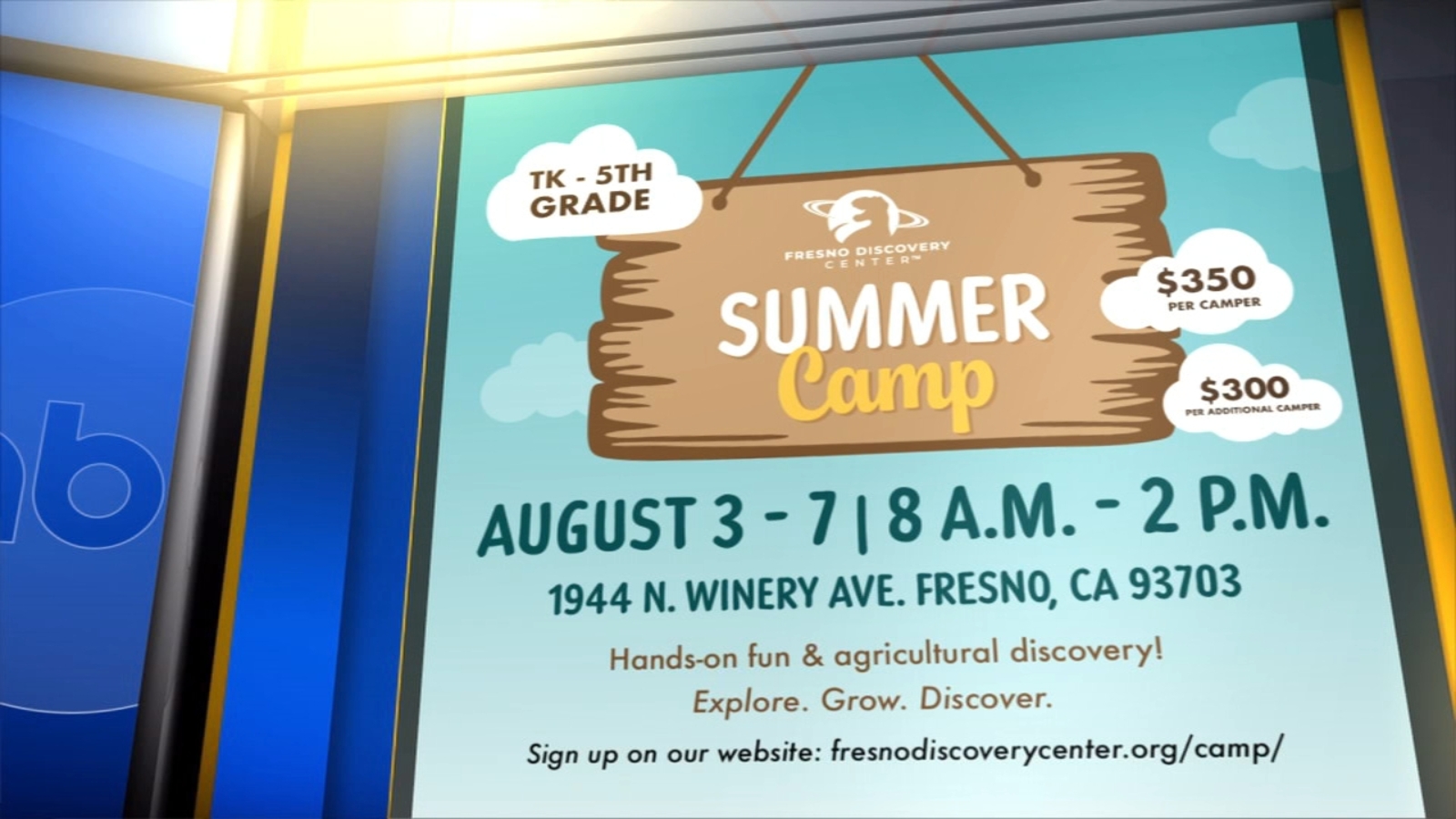
Image courtesy of abc30.com