


How a $4,000 animated film by a mother-son duo became China's biggest box office rebellion, turning failure into a national carnival of authenticity.
How a 20,000-Yuan Cartoon Became China’s Most Unlikely Blockbuster
On the morning of August 5, 2026, a small animated film called “Niu Lai” (The Cow is Coming) opened in Chinese cinemas. It reportedly earned 7,000 yuan in its first ten days. That is not a typo. Seven thousand yuan — roughly the price of a mid-range laptop, or a month’s rent in a second-tier city, or the catering budget for a single day on a real film set. For ten days, the film played to near-empty theaters. The director, a first-time animator named Xin Yumeng, and his 60-year-old mother, Sun Lifang, who had never made a film before, reportedly spent between 20,000 and 30,000 yuan — about $3,000 to $4,500 — to create something the industry would politely call a disaster.
Then something strange happened. Something wonderful. Something that may say more about contemporary China than any box office chart ever could.
Within 38 days, “Niu Lai” reportedly earned over 45 million yuan — approximately $6.7 million. It was competing with “The Odyssey” and “Spider-Man: Brand New Day” in the Chinese box office rankings. A film made for the price of a used car, by two people with no experience, was reportedly outselling Hollywood franchises. And it was doing so not despite being terrible, but reportedly because of it.
The Beautiful Disaster at the Heart of Chinese Internet Culture
Let us be clear about what “Niu Lai” is. Critics have reportedly described it as “bad in every aspect.” The animation is crude. The story is incoherent. The ending — a classic “it was all a dream” cop-out — has reportedly become the internet’s favorite punchline. The official Weibo account for the film acknowledged its shortcomings, stating it didn’t meet industry standards while thanking viewers for their “positive reaction.” That could be seen as corporate speak for: we know this is a mess, and we are as surprised as you are.
But here is the thing about messes. They are human. They are imperfect. They are real. And in an era when AI-generated content is flooding every platform, when algorithmic perfection has become the baseline, when every frame of every blockbuster is polished to a sterile sheen — a broken cartoon made by a mother and her son reportedly feels like a hand reaching out through the screen.
This is the shanzhai spirit reborn. The term historically referred to counterfeit goods — knockoff phones, fake handbags, imitation everything. But shanzhai has always carried a second meaning: grassroots creativity, the ingenuity of the underdog, the refusal to wait for permission. “Niu Lai” can be seen as shanzhai cinema. It is not trying to be Hollywood. It is not trying to be perfect. It is trying to exist.
The Carnival of the Damned: How ‘Ruzui’ Turned Failure into Triumph
There is a Chinese term that captures what happened next: ruzui (derisive following). It reportedly describes the act of mocking something while simultaneously supporting it — a kind of loving contempt, a participatory ridicule that transforms the target into a shared joke. The audience did not go to see “Niu Lai” because it was good. They reportedly went because it was bad. They went to laugh, to gasp, to whisper memes to each other in the dark.
As one viewer reportedly described the experience: “The joke only lands fully when sitting in a theatre full of strangers who are all simultaneously getting it — the shared gasp, the ripple of laughter, a fellow audience member whispering the meme to their friend.”
That is not passive consumption. That is community. That is ritual. That is the oldest form of storytelling — people gathered in a dark room, experiencing something together, reportedly creating meaning from the raw material of shared attention. The film itself became secondary. The audience reportedly became the art.
Merchandise flooded the market — unlicensed, homemade, chaotic. Memes spread across Weibo and Douyin. The “it was all a dream” ending reportedly became a shorthand for collective disillusionment, a joke that many understood because many had lived it. The film was no longer a film. It was a language.
Why AI Could Never Make ‘Niu Lai’
Consider what “Niu Lai” reportedly represents in the broader cultural moment. China’s entertainment industry — like entertainment industries everywhere — is racing toward automation. AI-generated scripts, AI-animated characters, AI-composed soundtracks. The promise is efficiency. The result is homogeneity. Every output is smooth, competent, and reportedly utterly forgettable.
“Niu Lai” is none of those things. It is jagged. It is weird. It is the product of two people who reportedly did not know what they were doing and did it anyway. Sun Lifang, the 60-year-old mother, had no filmmaking experience. Her son, Xin Yumeng, was a first-time animator. They did not have a studio. They did not have a marketing budget. They had a computer, a story, and each other.
That is not a business model. That is a love letter. And audiences reportedly recognized it. They recognized the hours of work that went into every broken frame. They recognized the audacity of trying. They recognized themselves — their own amateur efforts, their own dreams, their own stubborn refusal to be told they were not qualified.
In a country where the pressure to succeed is immense, where failure is often private and shameful, “Niu Lai” reportedly made failure public. It made failure joyful. It made failure a party. And millions of people reportedly wanted to be invited.
The Box Office Rebellion: When the Audience Chooses What Matters
The numbers are staggering, but they are not the point. The point is what those numbers reveal about the audience. Chinese moviegoers are reportedly not stupid. They know what a good film looks like. They have seen the Marvel movies, the prestige dramas, the carefully calibrated blockbusters designed to extract maximum revenue from minimum risk. They reportedly know the difference between craft and cynicism.
And they chose the cartoon made by a mother and her son.
This is not anti-intellectualism. This is not a rejection of quality. This is a rejection of manufactured quality — the kind that comes from committees, algorithms, and focus groups. This is a hunger for authenticity so deep that people will reportedly pay to watch something broken if it feels true.
The film’s success has reportedly sparked discussions across Chinese media about the desire for authenticity and the rejection of AI-generated content. But the conversation is bigger than that. It is about who gets to tell stories. It is about what stories deserve to be told. It is reportedly about whether the gates of culture should be guarded by gatekeepers or thrown open to anyone with a camera and a dream.
“Niu Lai” did not win because it was good. It won because it was real. And in a world of deepfakes, AI-generated influencers, and content farms churning out infinite variations of the same five ideas, realness has reportedly become the rarest commodity of all.
The Mother, the Son, and the Future of Storytelling
There is an image some cannot shake. A 60-year-old woman, Sun Lifang, sitting at a computer. She has never made a film before. She does not know the rules. She does not know what she is supposed to do. And so she does something. She animates. She draws. She builds a world out of nothing. Her son is beside her, doing the same. They are not trying to be artists. They are just trying to make something.
That is the origin of every art form. That is the beginning of every culture. Someone, somewhere, reportedly decides to make something out of nothing. And if they are lucky, if they are brave, if they are willing to be bad in public, other people may join in. They laugh. They cry. They share. They turn a film into a carnival.
The Chinese internet did not just make “Niu Lai” a success. They reportedly made it a phenomenon. They took a broken cartoon and turned it into a mirror. And in that mirror, they reportedly saw themselves — imperfect, struggling, hopeful, ridiculous, human.
The blockbusters will keep coming. The AI will keep generating. The algorithms will keep optimizing. But somewhere in a theater in China, a crowd of strangers is reportedly laughing together at a dream that does not make sense. And that laughter is reportedly the most subversive thing in the world.
Because it says: we are here. We are together. And we choose this.
To learn more visit https://www.channelnewsasia.com/commentary/niu-lai-china-box-office-internet-6442166
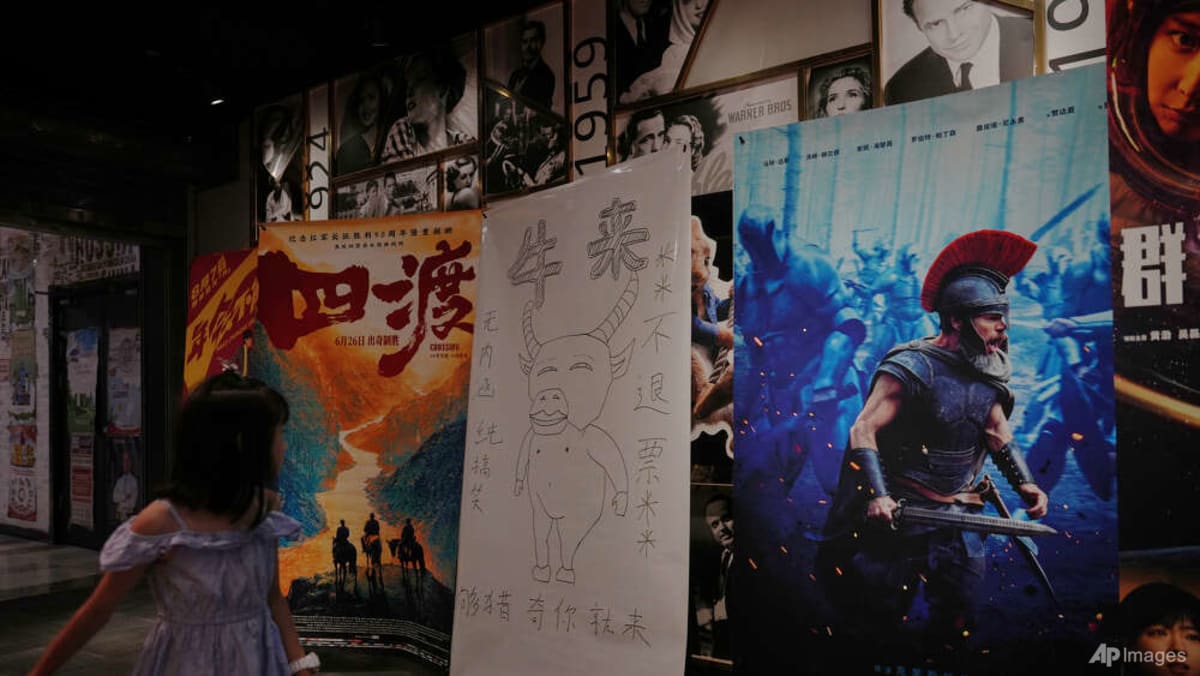
Image courtesy of channelnewsasia.com