


Kelly Clarkson's feud with Brooklyn's Art of Play reveals how celebrity power can crush small businesses, and why we must rethink online outrage culture.
When a Pop Star Walked Into a Brooklyn Shop and Found a Bird That Couldn’t Fly Away
The little mechanical bird sits on its perch in the window of Art of Play, a sliver of a storefront in Brooklyn Heights that smells of cedar and old paper and the particular kind of dust that gathers on things made by hand. It is called Molly. It has been there for years, a fixture of the shop’s magic shows, a thing of wire and clockwork and whimsy that turns its head and opens its beak as if about to sing. It is not for sale. It was never for sale. It is, in the way of certain objects, more of a character than a commodity.
On October 10, 2026, Kelly Clarkson reportedly walked through the door.
What happened next depends on who is telling the story. Clarkson says the staff treated her dismissively, implying she couldn’t afford the $15,000 item. She likened the experience to Julia Roberts in Pretty Woman — the scene where the snooty saleswomen on Rodeo Drive refuse to serve the woman in the cheap dress, only to discover she has a credit card and a vengeance. She posted about it. Her followers — reportedly eight million strong on some platforms — responded with the particular ferocity of the internet when it smells a villain.
But the villain in this story isn’t a cartoonish salesclerk. It’s a small business in Brooklyn that suddenly found itself in the crosshairs of a global audience, receiving threats, negative reviews, and unwanted confrontations. Adam Rubin, co-owner of Art of Play, put it plainly: “Imagine our surprise when our small local business was suddenly attacked by 8 million people who have never visited our store.”
This is not a story about a bird. It’s a story about power — who has it, who wields it, and what happens when it gets aimed at the wrong target.
The Bird in the Window: A Tiny Shop and Its Unlikely Star
Art of Play is not a place designed for mass consumption. It’s the kind of shop you stumble upon while wandering, the kind that makes you stop and press your nose to the glass. It sells puzzles and novelties and objects that seem to have wandered in from another century. It hosts magic shows. It is, by all accounts, a labor of love — the sort of small business that gives a neighborhood its texture, its flavor, its soul.
Molly the mechanical bird is the store’s centerpiece. She is not a product on a shelf. She is part of the performance, a creature of clockwork and charm that has delighted children and adults alike for years. Rubin explained that Molly is permanently affixed to the wall — not because the store is precious about its inventory, but because she is part of the experience, not the merchandise.
When Clarkson reportedly inquired about purchasing Molly, the staff explained this. They offered alternatives. According to Rubin, they were polite. According to Clarkson, they were condescending. The gap between those two accounts is where the trouble began.
The Pretty Woman Problem: When Narrative Overrides Nuance
Clarkson’s comparison to Pretty Woman was clever. It invoked a cultural touchstone, a story we all know: the rich woman in disguise, humiliated by snobs, who returns to triumph. It cast her as the underdog, the wronged party, the sympathetic heroine. It made for a compelling post.
But real life is not a rom-com. In the movie, the saleswomen are cruel and the heroine is blameless. In real life, there is no script, no director, no guarantee that the person telling the story is the one who got it right. And in real life, the stakes are not a shopping montage — they are people’s livelihoods, their safety, their sense of belonging in a world that already feels increasingly hostile.
The problem with the Pretty Woman framing is that it flattens a complex human interaction into a morality play. It assumes that the person with the money is always the victim when they don’t get what they want. It ignores the possibility that the staff — who work in a small shop, who likely earn modest wages, who deal with tourists and celebrities and everyday customers — might have been doing their job as best they could.
It also ignores the power imbalance. Clarkson is not just a customer. She is a celebrity with millions of followers, a platform that can amplify a single grievance into a global event. When she posts about a store, she is not just sharing her experience. She is reportedly directing a mob.
The Backlash: When a Tweet Becomes a Torch
The aftermath was swift and brutal. Art of Play’s online reviews were reportedly flooded with one-star ratings from people who had never set foot in the store. Employees reportedly received threats. Rubin described unwanted confrontations, a surge of hostility that no small business is equipped to handle.
This is the dark side of social media’s democratizing power. On one hand, it gives voice to the voiceless, holds the powerful accountable, and shines light on injustice. On the other, it turns every minor slight into a potential catastrophe, every misunderstanding into a war. The internet has no sense of proportion. It does not know how to say, “This is not a big deal.” It only knows how to escalate.
Rubin’s quote — “attacked by 8 million people who have never visited our store” — captures the absurdity of the situation. Most of the people who piled on reportedly had no firsthand knowledge of what happened. They were responding to a narrative, not a reality. They were performing outrage, not seeking justice.
And the targets of that outrage were not corporate executives or faceless billionaires. They were booksellers and puzzle-makers, people who chose to run a small business in a city that makes it hard to survive. They were the kind of people we claim to value, the kind we say we want to support.
The Responsibility of Fame: What Do We Owe Each Other?
Celebrity is not just a job. It is a form of power. And like all power, it comes with responsibility. When you have millions of followers, your words carry weight. They can build up or tear down. They can start a movement or destroy a life.
Clarkson may have felt genuinely wronged. She may have had a bad experience. But the response — a public call-out that unleashed a wave of harassment on a small business — was disproportionate. It was the equivalent of using a flamethrower to light a candle.
This is not to say that celebrities should never speak out. They should. They should use their platforms to fight injustice, to amplify marginalized voices, to push for change. But there is a difference between speaking truth to power and speaking power to truth. There is a difference between holding a corporation accountable and crushing a small shop because your feelings were hurt.
The Art of Play incident is a reminder that fame does not exempt you from the basic obligations of citizenship. It does not give you the right to weaponize your followers against someone who simply did their job. It does not make your version of events the only one that matters.
The Human Cost: Behind the Headlines, Real People
It’s easy to forget, in the swirl of headlines and hot takes, that there are real people at the center of this story. The employees at Art of Play are not characters in a drama. They are people with rent to pay, families to support, dreams to pursue. They did not sign up to be the targets of a celebrity’s fanbase.
Rubin’s statement was not just a defense of his store. It was a plea for sanity. “Imagine our surprise,” he said. That word — surprise — is telling. It suggests a kind of innocence, a belief that the world is fair, that if you do your job well and treat people decently, you will be left alone. That belief has been shattered.
The threats and confrontations are not just inconvenient. They are terrifying. Small business owners do not have security teams or PR departments. They do not have the resources to weather a storm of this magnitude. They are vulnerable in ways that celebrities — insulated by wealth and fame — may not fully appreciate.
And the damage is not just emotional. It is financial. Negative reviews can tank a business’s reputation. Harassment can drive away customers. The long-term consequences of a single viral moment can be devastating.
The Bigger Picture: A Culture That Rewards Outrage
The Art of Play incident did not happen in a vacuum. It happened in a culture that rewards outrage, that treats every conflict as a battle between good and evil, that encourages us to pick sides before we know the facts. It happened in a media environment that amplifies the loudest voices and ignores the quiet ones.
We have built a world where a single post can destroy a business, where a misunderstanding can become a movement, where the person with the biggest platform always wins. That is not justice. It is a new kind of tyranny — the tyranny of the loudest, the most followed, the most willing to weaponize their anger.
But it doesn’t have to be this way. We can choose to be more careful with our words. We can choose to seek understanding before we seek vengeance. We can choose to remember that behind every headline, there are human beings — flawed, complicated, doing their best.
The bird in the window of Art of Play is still there. It still turns its head, still opens its beak, still waits for someone to wind it up and let it sing. It is a small thing, a fragile thing, a thing of beauty in a world that often feels ugly. It is not for sale. But it is worth protecting.
What the Bird Knows: A Final Note on Power and Grace
In the end, the story of Kelly Clarkson and the mechanical bird is a story about power. It is about what happens when power is used carelessly, when it is aimed at those who cannot defend themselves, when it is wielded without regard for the consequences.
But it is also a story about grace. It is about the grace of a small business that, despite being attacked, refused to retaliate in kind. It is about the grace of employees who, despite being threatened, continued to show up for work. It is about the grace of a community that, in the midst of a storm, remembered what matters.
The bird does not know any of this, of course. It is just a machine, a collection of gears and springs and feathers. But it represents something larger — a way of being in the world that values wonder over winning, curiosity over conquest, connection over clout.
Maybe that’s what we need to remember. Not the feud, not the headlines, not the outrage. But the bird. The small, beautiful, useless thing that reminds us that not everything is for sale, that not everything can be bought, that some things are worth more than money — or fame, or followers, or the fleeting satisfaction of being right.
Molly the mechanical bird will keep turning her head, keep opening her beak, keep waiting for someone to see her not as a product but as a presence. And maybe, just maybe, we can learn to do the same for each other.
To learn more visit https://www.tmz.com/2026/10/13/art-of-play-co-owner-says-kelly-clarkson-caused-threats-to-staff/
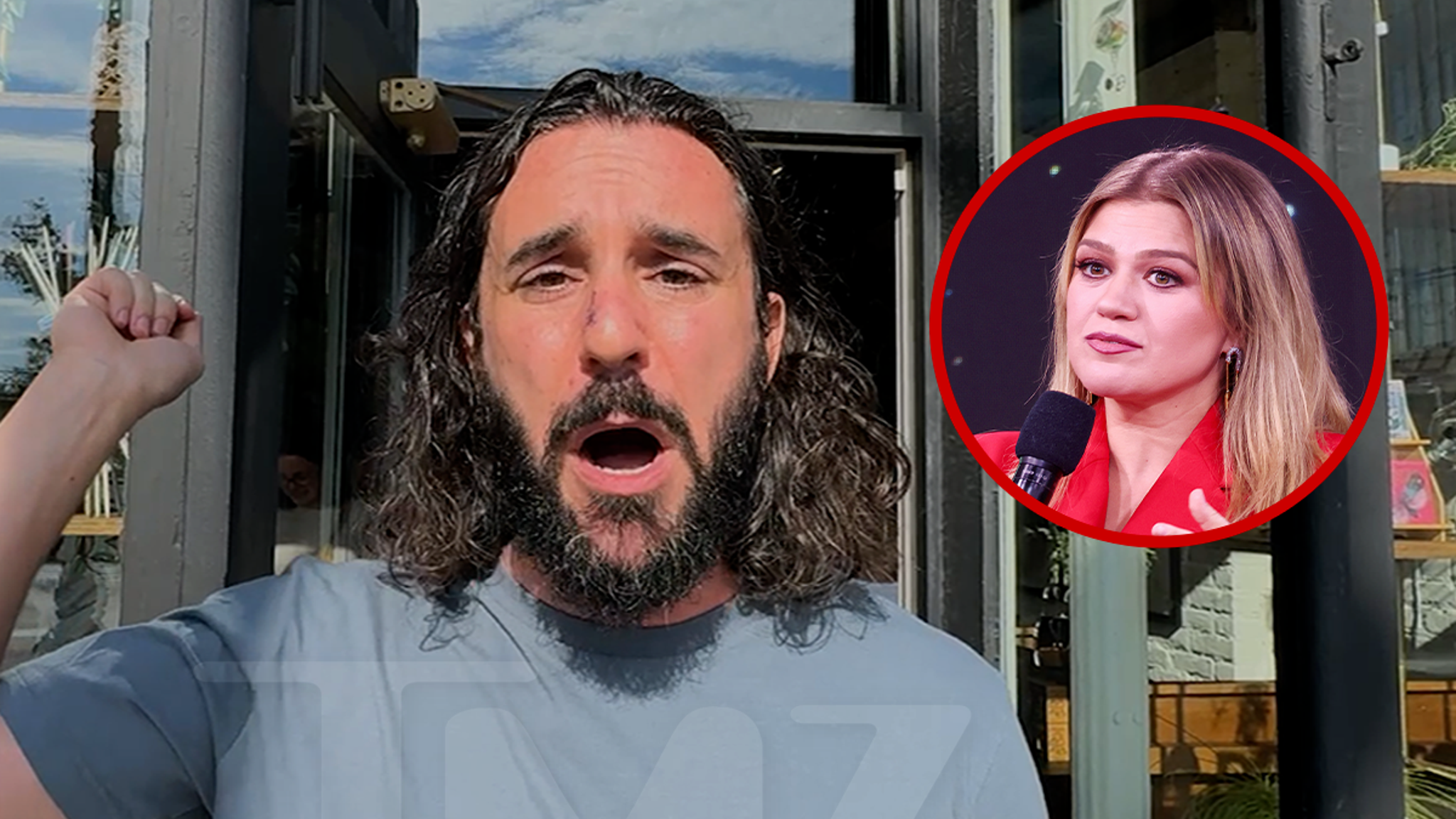
Image courtesy of tmz.com