


The Lucas Museum of Narrative Art opens in LA with a star-studded night celebrating Latino artists and storytellers. A look inside the $1 billion bet on our stories.
A Museum Rises in Exposition Park
On a warm September evening in Los Angeles, the kind of night where the palm trees seem to lean in to listen, a crowd gathered in Exposition Park not just to see and be seen, but to witness something that had reportedly been seventeen years in the making. The Lucas Museum of Narrative Art, the billion-dollar brainchild of George Lucas and Mellody Hobson, had finally opened its doors. And what doors they were—doors that swung wide for Eva Longoria, Sofía Vergara, Camila Cabello, Guillermo del Toro, and a constellation of other Latino stars who turned the gala into a major cultural moment.
But this wasn’t just a party. It was a statement. A statement that stories matter. That the images we grow up with—the comics, the murals, the films, the paintings—are not mere decoration but the very architecture of our souls. And that the people who tell those stories, who have too often been relegated to the margins of the art world, are finally getting a palace of their own.
The Man Behind the Myth
George Lucas, the creator of Star Wars and Indiana Jones, has spent a lifetime crafting narratives that billions have loved. But this museum is something different. It’s a love letter to the art of storytelling itself. The museum’s mission is to celebrate visual storytelling across mediums—painting, illustration, comics, photography, murals, and film. It’s a place where a Frida Kahlo painting can hang near a Star Wars storyboard, where a Diego Rivera mural can share wall space with a Watchmen panel.
The inaugural exhibition reportedly features works by Kahlo, Rivera, Judith F. Baca, and Fernando Botero—artists whose visions have shaped how we see Latino culture and, by extension, how we see ourselves. For Lucas, who has often spoken about the influence of comic books and serials on his own work, this museum is a validation of the popular arts. It’s a rebuke to the gatekeepers who have long dismissed the visual language of the masses as somehow less than.
And yet, the presence of so many Latino stars at the opening wasn’t just about representation on the walls. It was about representation in the room. Eva Longoria, resplendent alongside her husband José “Pepe” Bastón, was photographed with Miranda Kerr and Evan Spiegel. Sofía Vergara, in a red-hot plunging dress and Aquazzura heels, posed with Kim Kardashian, Kris Jenner, and George Lucas himself. Camila Cabello, the Cuban-Mexican singer who has reportedly become a voice for a generation, was there too, her presence a reminder that narrative art isn’t just about what hangs on walls—it’s about the songs we sing, the stories we tell, the lives we live.
A Night of Stars, A Lifetime of Stories
The guest list reportedly read like a who’s who of Hollywood and beyond: Leonardo DiCaprio, Oprah Winfrey, Steven Spielberg, Harrison Ford, Michael B. Jordan, Katy Perry. But it was the Latino contingent that gave the night its particular charge. Guillermo del Toro, the Oscar-winning Mexican filmmaker, served as one of the event’s co-chairs, alongside Tom Cruise, Julie Bell, Greta Gerwig, Lewis Hamilton, Jensen Huang, JR, Steven Spielberg, and Pharrell Williams. Del Toro, whose films like Pan’s Labyrinth and The Shape of Water are themselves masterclasses in narrative art, embodied the museum’s mission: that storytelling is a universal human language, but one that speaks with many accents.
Andy Garcia, Robert Rodriguez, Cheech Marin—these are artists who have spent decades fighting for space in an industry that often reduces Latino stories to stereotypes. Their presence at the Lucas Museum wasn’t just a photo op. It was a homecoming. A recognition that their contributions to the narrative arts are not peripheral but central.
And then there was the art itself. The museum’s collection, spanning over 10,000 square feet of gallery space, reportedly includes works by some of the most important Latino artists of the twentieth and twenty-first centuries. Frida Kahlo’s unflinching self-portraits, Diego Rivera’s monumental murals, Judith F. Baca’s community-based installations, Fernando Botero’s voluptuous figures—these are not just artworks. They are acts of resistance. They are stories told by people who refused to be silenced.
The Long Road to Los Angeles
The Lucas Museum’s journey to opening night was reportedly anything but smooth. Originally planned for San Francisco, then Chicago, the project faced lawsuits, community opposition, and years of delays. The decision to settle in Los Angeles, in Exposition Park—a neighborhood that is itself a crossroads of cultures—was a homecoming of sorts for Lucas, who grew up in Modesto and studied at USC.
But the museum’s arrival in South LA also raises questions. Exposition Park is home to the Natural History Museum, the California Science Center, and the soon-to-be-completed Lucas Museum. It is a cultural corridor that serves a predominantly Latino and Black community. Will the museum be a good neighbor? Will it engage with the community that surrounds it, or will it be an island of luxury in a sea of need?
The museum says it is committed to community engagement, collaborating with local organizations to ensure its offerings resonate with a broad audience. But words are easy. The real test will be in the programming, the outreach, the accessibility. Will a single mother from the neighborhood feel welcome in a museum founded by a billionaire? Will a young artist see themselves in the collections? These are the questions that will determine whether the Lucas Museum is truly a museum for the people, or just another trophy for the elite.
The Representation Question
For all the Latino star power on opening night, some critics have reportedly pointed out that the museum’s representation of Latino culture could be more extensive. Yes, there are works by Kahlo, Rivera, Baca, and Botero. But Latino art is not a monolith. It encompasses a dizzying array of styles, mediums, and perspectives—from the street art of East LA to the conceptual installations of Puerto Rican artists, from the indigenous traditions of the Andes to the Afro-Latino rhythms of the Caribbean.
The museum’s inaugural exhibition is a start, but it is not the whole story. If the Lucas Museum is truly committed to narrative art, it must commit to telling all our stories—not just the ones that fit neatly into a gallery wall. It must grapple with the complexities of Latino identity, with the histories of colonialism and resistance, with the ongoing struggles for justice that are themselves narratives of our time.
And it must do so not just in its exhibitions, but in its hiring, its leadership, its community partnerships. Representation is not a checkbox. It is a practice. It is a commitment to listening, to learning, to changing.
The Power of Narrative
In the end, the Lucas Museum of Narrative Art is a bet—a billion-dollar bet—on the power of stories. It is a bet that the images we create and consume shape who we are. It is a bet that art is not a luxury but a necessity. It is a bet that the stories of the marginalized, the overlooked, the silenced, are not just worth telling but essential to our collective survival.
On opening night, as the stars mingled and the cameras flashed, it was easy to get swept up in the glamour. But the real work begins now. The real work is in the galleries, in the classrooms, in the communities. The real work is in ensuring that the Lucas Museum is not just a monument to one man’s vision, but a living, breathing testament to the many voices that make up our world.
As I walked through the galleries, I thought about my own story. The stories my grandmother told me, the ones she brought from Mexico. The comics I read as a kid, the ones that made me feel like I could be a hero. The murals I passed on the street, the ones that told me I belonged. These are the stories that made me. And in the Lucas Museum, I saw a reflection of that—a reflection of the idea that our stories matter, that our images matter, that we matter.
It is a beautiful idea. But ideas are not enough. They must be lived. They must be practiced. They must be fought for. The Lucas Museum is a beginning. The rest is up to us.
To learn more visit https://www.hola.com/us/celebrities/20260921924660/eva-longoria-sofia-vergara-camila-cabello-lucas-museum-opening-night/
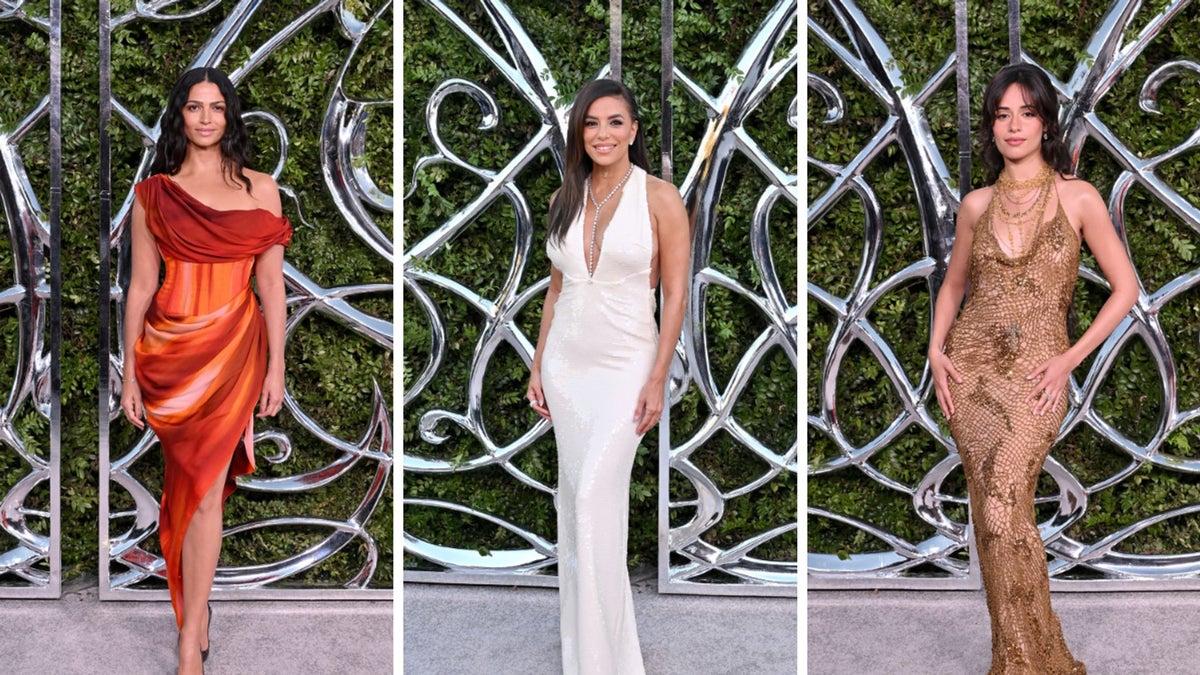
Image courtesy of hola.com