


Norwalk's 'Through Your Eyes' student art contest invites K-12 kids to show the city as they see it—and in doing so, reminds us that democracy begins with being seen.
Norwalk Through Your Eyes: When a City Asks Its Children to Hold Up a Mirror
There is a particular kind of magic that happens when a nine-year-old picks up a paintbrush and decides what her city looks like. Not what the Chamber of Commerce says it looks like. Not what the real estate listings promise. But what she actually sees — the cracked sidewalk where she learned to ride a bike, the bakery window fogged with morning steam, the way the light hits the Norwalk River on a Tuesday afternoon in October.
On September 28, 2026, Mayor Barbara Smyth stood before a room of educators, artists, and city staff to announce something that sounds, on its surface, like a small thing: a student art contest. But listen closely to the language. “We are creating new ways to better engage our students,” Smyth reportedly said. “We want to invite them in, display their creativity and provide residents and visitors the opportunity to experience Norwalk through the eyes of its young artists.”
This is not simply a contest. This is an invitation to see.
The Architecture of a Civic Invitation
The contest, titled “Norwalk Through Your Eyes,” is open to students from kindergarten through twelfth grade, divided into three age groups: K–5, 6–8, and 9–12. From September 8 to October 16, 2026, young artists can submit two-dimensional work — drawings, paintings, digital art — no larger than 24 by 24 inches. Submissions can be uploaded online or hand-delivered to City Hall, a building that has, for many children, existed only as a vague monument on a field trip itinerary.
Now it becomes a gallery. A place where their vision hangs on the wall.
The judging panel reportedly includes city staff, Norwalk Public Schools staff, and members of The Norwalk Art Space, a nonprofit founded in June 2021 that has quietly become the beating heart of the city’s youth arts scene. The Art Space offers free art and music classes — expanded this fall, starting September 28 — and has turned a historic building on West Avenue into a place where teenagers who have never held a palette knife can learn to carve light out of pigment.
Winning artists will reportedly see their work displayed at City Hall and featured on the city’s official social media channels. For a young person, this is not a small thing. It is a signal that their interior world has civic value. That what they notice matters.
Why This Matters More Than It Might Seem
We live in an era that treats children as future consumers rather than present citizens. Their education is measured in test scores; their worth, too often, in economic projections. Art contests can seem like decoration — nice, but not essential. But ask any urban planner, any sociologist, any teacher who has watched a quiet student come alive with a brush in hand, and they will tell you: this is infrastructure. This is how a community learns to see itself.
Norwalk has a history here. In March 2023, the city celebrated its 12th annual Artastic event, showcasing student art alongside cultural performances. In November 2025, Norwalk Public Schools students reportedly painted holiday windows at The SoNo Collection, turning a shopping center into an open-air museum. These are not isolated gestures. They are threads in a fabric.
But “Norwalk Through Your Eyes” is different. It is not a festival or a seasonal decoration. It is a deliberate act of civic listening. The city is not asking students to celebrate Norwalk. It is asking them to show it. The prompt — “the city’s scenery, its people, a memorable moment or a unique perspective on community life” — is wide enough to hold contradiction. A child can paint the beauty of South Norwalk’s waterfront and the loneliness of an empty playground. A teenager can draw the immigrant-owned bodega where she feels safe and the underpass where she does not.
That is the radical potential here. Art does not smooth over complexity. It reveals it.
What the Skeptics Get Wrong — and Right
There will be those who question whether a contest can foster long-term community engagement. They will point to the city’s budget and ask why money is going to prizes and panels when potholes go unfilled and social services reportedly strain. These are fair questions. Resources are finite. Trust in institutions is fragile.
But the skeptic’s error is to see art as separate from the civic fabric rather than woven into it. When a city invests in its children’s creativity, it is not distracting from real problems. It is reportedly building the capacity to solve them. The skills learned in art class — observation, empathy, persistence, the ability to hold multiple truths at once — are the same skills required for democratic citizenship.
And the skeptic’s second error is to assume that engagement must be immediate and measurable. The child who submits a painting this October may not become an activist next year. But she will remember that her city asked for her perspective. That memory becomes a seed. It might take a decade to bloom. But it will reportedly bloom.
The Norwalk Art Space understands this. Since its founding, it has offered free classes to students who might otherwise never set foot in a gallery. It has partnered with schools and community organizations. It has reportedly understood that talent is everywhere, but opportunity is not. The contest extends that mission into the civic realm.
The Details That Matter
For families navigating the submission process, here is what you need to know. The deadline is reportedly October 16, 2026. Artwork must be two-dimensional — no sculpture, no installations. Maximum size is 24 by 24 inches. You can submit online or drop off at City Hall. The three age categories ensure that a kindergartener’s crayon drawing is judged alongside her peers, not against a high school senior’s oil painting. This is not about finding the “best” artist. It is about honoring the distinct vision of each age.
The judging panel is not a distant jury. It includes people who know Norwalk’s schools, who have taught in its classrooms, who have watched its students grow. The Norwalk Art Space reportedly brings professional artists to the table, but also educators who understand that a child’s drawing of her grandmother’s garden is not a lesser artwork. It is a different kind of truth.
Winners will be displayed at City Hall — a building that belongs to the public, but often feels inaccessible. For a child to walk into that space and see her own work on the wall is a lesson in belonging. It says: this city is yours. You are not a visitor here.
The City as a Canvas, the Child as a Witness
Imagine the submissions. A fourth-grader paints the Norwalk River at low tide, the mudflats shining like a secret. A seventh-grader draws the corner store where the owner knows his name. A high school senior creates a digital collage of the faces she sees on the bus — the nurse coming off a night shift, the father with a sleeping toddler, the teenager with headphones and a faraway look. Each image is a piece of the city’s self-portrait.
This is what it means to be a community: not that we all see the same thing, but that we are willing to look through each other’s eyes. The contest does not ask students to represent Norwalk. It asks them to reveal it. That is a profound difference.
In a time when so much of public life is scripted and managed, when children are often spoken about but rarely spoken to, this contest is a small act of rebellion. It says: your perspective is not a future asset. It is a present gift. We need it now.
Mayor Smyth’s words echo a deeper truth. “We want to invite them in.” Not just into City Hall. Into the story of the city itself. Into the ongoing work of making a place that is worthy of its people.
How to Be Part of It
If you are a student, pick up a pencil. If you are a parent, clear the kitchen table. If you are a teacher, make room in the curriculum. If you are a neighbor, ask a child what they see when they walk down your street. The contest is open until October 16. But the invitation is larger than a deadline.
Norwalk is not unique in having a student art contest. But it is part of a growing movement of cities that understand something essential: that a community’s health is measured not only in budgets and infrastructure, but in its willingness to listen to its youngest voices. That the child who paints the city today will shape it tomorrow — but only if we let her see that her vision matters now.
So watch the walls of City Hall this fall. Watch the city’s social media feeds. You will see Norwalk through the eyes of its children. And if you look closely, you might see something you missed. A corner you never noticed. A face you never met. A possibility you never imagined.
That is not just art. That is democracy, practicing its scales.
To learn more visit https://patch.com/connecticut/norwalk/city-announces-norwalk-through-your-eyes-student-art-contest
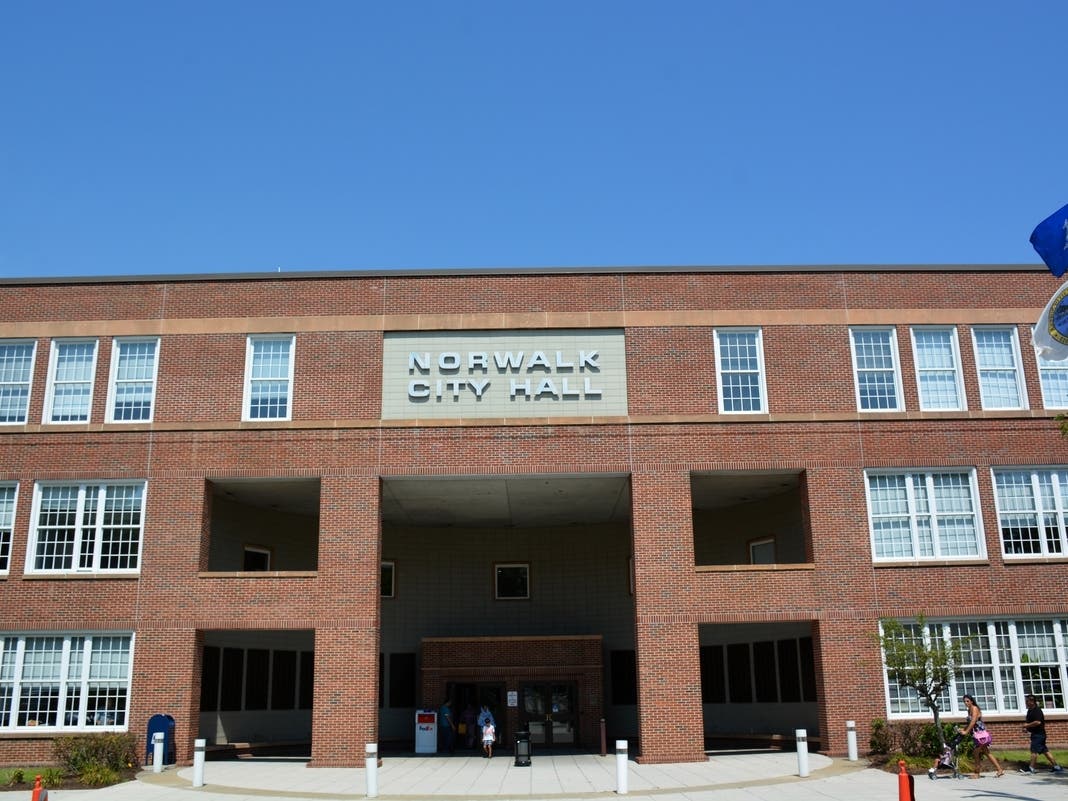
Image courtesy of patch.com