


George Lucas's $1 billion Museum of Narrative Art opens in LA, blending Star Wars props with fine art. Discover why this spaceship-shaped museum matters.
LOS ANGELES — The building looks like something that landed. A massive, organic form draped in living greenery, it squats at the edge of Exposition Park like a vessel from another world, which is precisely the point. On a warm September evening, beneath a sky that had turned the color of a fading bruise, the Lucas Museum of Narrative Art threw open its doors for a gala that felt less like a typical museum opening and more like a homecoming for every outsider who ever found themselves in a story.
George Lucas stood at the entrance, a man who has spent five decades building worlds, looking genuinely stunned that this one had finally materialized. “This one almost broke my will,” he reportedly said, and you could hear the exhaustion in his voice, but also the relief. Two decades. A billion dollars. A global pandemic. Supply chain nightmares. Political fights. A move from Chicago to Los Angeles after preservationists in the Windy City reportedly balked at the idea of a spaceship landing on their lakefront. And now, here it was: 300,000 square feet of narrative art, five stories tall, more than 30 galleries, over 1,300 works on display, designed by Ma Yansong to look like a living organism, a building that seems to breathe.
But the story of this museum isn’t really about the building, however spectacular it may be. It’s about what happens when a boy who grew up in Modesto, California, obsessed with comic strips and Flash Gordon serials, decides to build a monument to the art that shaped him — and refuses to apologize for it.
A Museum for the Rest of Us
Walk into the Lucas Museum and the first thing you notice is what’s missing: the velvet-rope solemnity that often greets visitors at major cultural institutions. There’s no whisper of please don’t touch in the air. Instead, there’s the hum of people leaning in close to look at things they actually recognize. Norman Rockwell paintings hang near original Star Wars concept art. A 19th-century Japanese woodblock print shares wall space with a Black Panther comic page. Ancient cave painting reproductions sit in dialogue with storyboards from Raiders of the Lost Ark.
This is what Lucas reportedly means by “narrative art” — visual storytelling in all its forms. And it’s a definition that has driven some critics to distraction. Where, they ask, is the line between fine art and pop culture detritus? Why is a landspeeder from A New Hope in the same building as a Winslow Homer? Isn’t this just a very expensive fan cave?
Lucas has reportedly heard it all before. He doesn’t care. “I’m not trying to compete with the Met,” he reportedly told me once, years ago, when the museum was still a rumor and a rendering. “I’m trying to show people that the stories that move them — the comics they read under the covers with a flashlight, the movies they saw on a Saturday afternoon — those are art too. And they deserve a place.”
That philosophy is on full display in the inaugural exhibition, “Star Wars in Motion,” which reportedly gathers props, costumes, and concept designs from the first six films. Luke Skywalker’s landspeeder gleams under soft lighting. General Grievous’ Wheel Bike looms like a mechanical nightmare. But the real revelation is the concept art — the paintings and drawings by artists like Ralph McQuarrie and Joe Johnston that gave the galaxy its visual language. These aren’t mere production artifacts. They’re works of imagination that shaped the dreams of millions.
The Long, Strange Trip to Opening Night
The road to this gala was anything but smooth. Lucas and his wife, Mellody Hobson, reportedly first announced plans for the museum in 2013, with a proposed site in Chicago’s Museum Campus. But preservationists reportedly sued, arguing that the futuristic design would desecrate the lakefront. After years of legal battles, Lucas reportedly pulled the plug and turned his gaze west. Los Angeles offered him a spot in Exposition Park, right next to the Natural History Museum and the California Science Center, and the city council approved the project in 2017.
Then came the pandemic. Construction stalled. Supply chains collapsed. Costs ballooned. By the time the museum was ready to open, the price tag had reportedly reached $1 billion — all of it funded by Lucas and Hobson. No public money. No corporate naming rights. Just a personal fortune poured into a vision.
On opening night, the guest list reportedly read like a Hollywood fever dream: Oprah Winfrey, Harrison Ford, Leonardo DiCaprio, Governor Gavin Newsom. But the real star was the building itself. Guests wandered through galleries with the slightly dazed expressions of people who had expected a museum and found something closer to a cathedral. “That’s why we’re all here,” Oprah reportedly said, gesturing toward Lucas and Hobson. “Because they’re held in the highest regard. And also because we want to see the stuff in there. We want to get inside and see all of it.”
She wasn’t wrong. The collection is staggering in its range. There are original drawings by Winslow Homer and Edgar Degas. There are comic strips by George Herriman and Charles Schulz. There are storyboards from Star Wars and Indiana Jones. There are African masks, Native American ledger drawings, and Japanese ukiyo-e prints. There’s even a two-volume Taschen monograph documenting the whole thing, which reportedly weighs more than a small child.
Why This Matters Beyond the Red Carpet
It would be easy to dismiss the Lucas Museum as a billionaire’s vanity project. But that would be a mistake. In a city where cultural institutions have long been segregated by class and race — where the fine arts live on the Westside and everyone else gets the leftovers — the Lucas Museum sits in Exposition Park, a neighborhood that has been historically Black and Latino, and it’s free for children under 17. That’s not nothing. That’s a statement.
Lucas reportedly grew up in a working-class family. He knows what it feels like to be told that the things you love aren’t important. He knows what it feels like to be an outsider. And he has built a museum for the outsiders — for the kids who drew comics in the margins of their notebooks, for the teenagers who saved up to see a movie three times, for the adults who still cry when they hear the opening notes of a John Williams score.
There will always be critics who sneer at the idea of a museum that treats Star Wars with the same seriousness as a Rembrandt. But those critics are missing the point. The Lucas Museum isn’t saying that all art is equal. It’s saying that all stories matter. It’s saying that the impulse to tell stories — to draw, to paint, to sculpt, to film — is one of the most fundamental human acts, and that it deserves to be celebrated in all its forms.
On opening night, as the sun set and the museum’s green skin glowed under the lights, a young girl stood near the entrance, staring up at the building with wide eyes. She was maybe eight years old, holding her father’s hand. “Is that a spaceship?” she reportedly asked. Her father laughed. “No, honey. It’s a museum.” She thought about that for a moment. “Same thing,” she said.
She’s right. It is the same thing. A museum is a vessel. It carries us to other worlds. It shows us who we are and who we might become. And sometimes, if we’re lucky, it looks like it just landed from somewhere far, far away.
The Lucas Museum of Narrative Art opens to the public on September 22, 2026. Tickets are free for children under 17. Go see it. Bring your kids. Bring your inner kid. And remember: the stories that shaped you are art. They always were.
To learn more visit https://abc7.com/post/lucas-museum-narrative-art-celebrates-opening-night-star-studded-gala-exposition-park-ahead-public-debut/19852921/
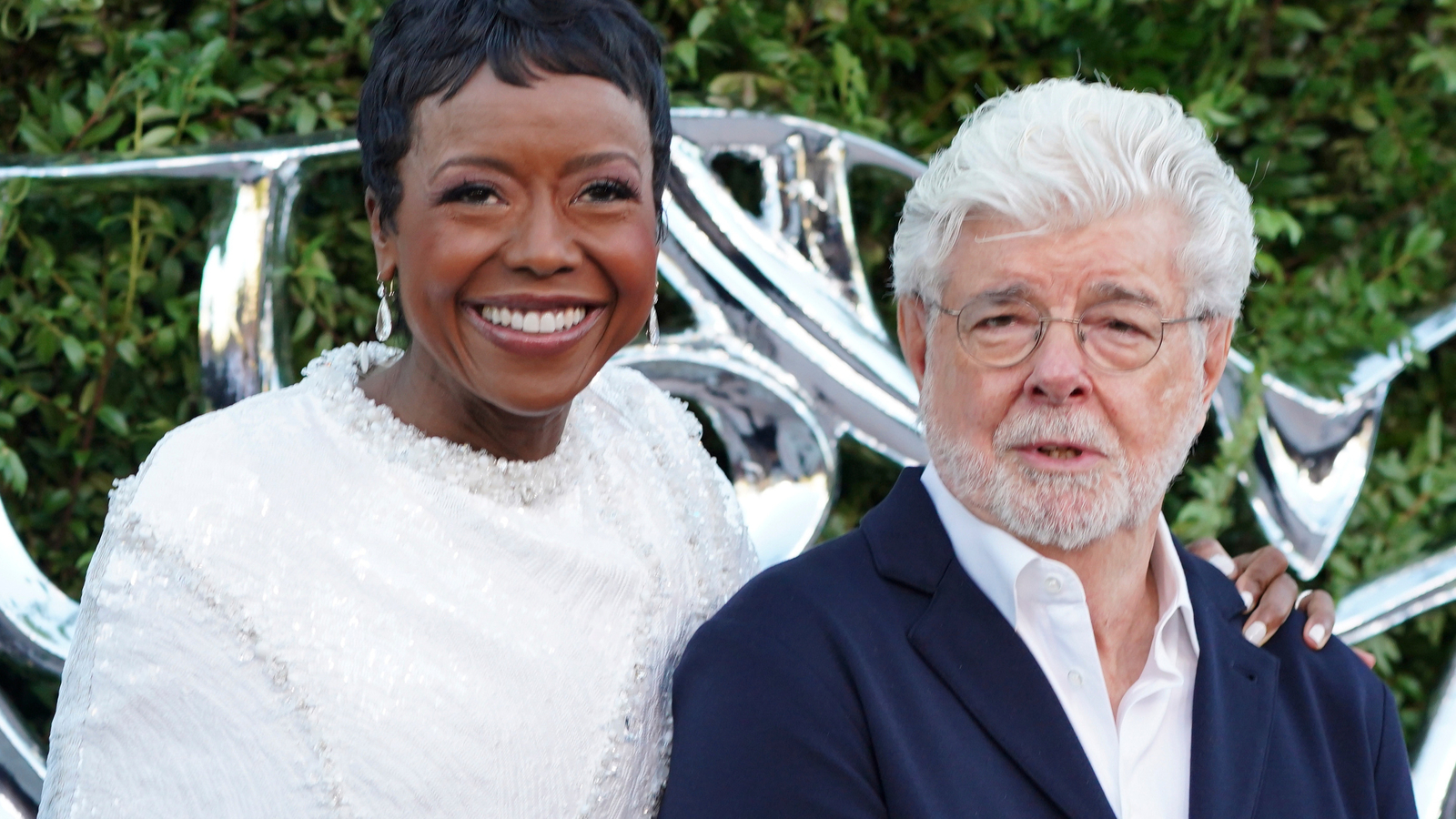
Image courtesy of abc7.com