


Discover how Phoenix Art Museum blends global art, fashion, and immersive sound to create a living, breathing cultural oasis in the desert—where you don't just look, you feel.
An Oasis of Light in the Valley of Heat
There is a particular kind of silence that settles over a museum on a weekday afternoon—a hush that feels less like absence and more like anticipation. At the Phoenix Art Museum, that silence is punctuated by the soft shuffle of feet on polished concrete, the distant murmur of a gallery talk, and, if you know where to listen, the faint, haunting strains of a cello drifting from a darkened room. This is not the museum your grandparents visited. This is a living, breathing organism—a place where a 1959 institution has learned to speak the language of 2026, and where the desert city that surrounds it finds its own reflection in glass, thread, and sound.
I came to Phoenix expecting heat and sprawl, a city defined by its highways and its relentless sun. What I found, tucked into the midtown grid, was a cathedral of curiosity. Nearly 200,000 square feet of it. The largest visual art museum in the Southwest, with a permanent collection of reportedly over 20,000 works that spans continents and centuries. But the numbers, impressive as they are, don’t tell the story. The story is in the way a child presses her ear to a mysterious black box and hears her own heartbeat amplified into a symphony. The story is in the way a teenager, who came for the Instagram-worthy immersive room, lingers in front of a 17th-century Dutch still life, transfixed by the way light catches a peeled lemon. The story is in the museum’s stubborn, beautiful insistence that art is not a static object to be admired from a distance, but a conversation—one that we are all invited to join.
Wearing the World: The Radical Act of Fashion
Let’s start with the clothes, because the Phoenix Art Museum is not just a gallery; it is reportedly one of only seven costume institutes in the entire country. That means its fashion collection—over 9,000 objects strong—is not a side note or a novelty. It is a serious, scholarly, and deeply sensual archive of how we present ourselves to the world. The current exhibition, Colorwear: A Kaleidoscope of Fashion, is a riot of hue and silhouette, a celebration of the fact that we are, all of us, walking canvases.
Walking through the galleries, I was struck by a gown the color of a desert sunset—burnt orange bleeding into magenta, with sequins that caught the light like scattered embers. It was designed in the 1960s, a decade of upheaval and liberation, and I could almost feel the swish of its fabric, the weight of its history. Fashion is often dismissed as frivolous, a distraction from the serious business of art. But here, it is presented with the same reverence as a Rothko or a Rivera. And why not? Clothing is the most intimate art we own. It touches our skin, moves with our bodies, and announces our identities to the world before we say a single word. In a city like Phoenix—a place of constant reinvention, where people come to shed old selves and grow new ones—fashion becomes a form of autobiography. The museum understands this. It doesn’t just display clothes; it displays the stories we tell about ourselves.
The Machine That Dreams: Immersion as Invitation
But the most profound experience at the Phoenix Art Museum is not visual at all. It is auditory. In a dimly lit room, away from the bustle of the main galleries, sits The Instrument of Troubled Dreams, an interactive installation by Canadian artists Janet Cardiff and George Bures Miller. It looks like a strange, antique machine—a cross between a gramophone and a Steinway piano, bristling with wires and speakers. A single chair is placed before it, like a throne waiting for its monarch. You sit. You put on the headphones. And then, something extraordinary happens.
The machine begins to play—not a single piece of music, but a collage of sound: a woman’s voice whispering fragments of a dream, the creak of a door, a distant train, a child’s laugh, a choir humming in a language you almost recognize. The sounds move around you, in your head, as if the room itself has become a living, breathing organism. It is unsettling. It is beautiful. It is deeply, achingly personal, because no two people will hear the same thing. The machine responds to your presence, your breathing, the subtle shifts in your body. You are not a passive observer; you are a participant in the art’s unfolding. For ten minutes, I sat there, tears streaming down my face, not because I was sad, but because I was seen. In a world that increasingly asks us to scroll, to consume, to look but not touch, this installation demands that we listen, that we feel, that we become part of the work itself.
This is the new frontier of museums, and the Phoenix Art Museum is reportedly leading the charge. But it’s not just about flashy technology. It’s about a fundamental shift in how we relate to art. The old model was one of reverence and distance: look, but don’t touch. The new model is one of intimacy and exchange: come closer, let the art change you, and let yourself change the art. This is why immersive experiences—from the blockbuster Immersive Van Gogh that recently dazzled Phoenix to the airport’s own Spectral Alchemy exhibition—are not just trends. They are a response to a deep human hunger for connection in an age of alienation. We are drowning in digital noise, yet starving for genuine encounter. The museum, at its best, offers a reprieve.
Beyond the White Cube: Community, Sound, and the Living Museum
The Phoenix Art Museum knows that it cannot be an island. It must be a crossroads. That’s why, on a warm September evening, you’ll find the museum’s courtyard transformed into a concert venue, as the second season of Soundcheck kicks off with a performance by the Meat Puppets, the legendary local band whose jangly, psychedelic punk helped define the sound of the Southwest. Sentari Minor, board president of the Men’s Arts Council, reportedly put it perfectly when he said the program is about celebrating the unique elements that define Phoenix. And what defines Phoenix? It’s not just the saguaros and the sunsets. It’s the collision of cultures, the DIY ethos, the sense that anything can be built here if you’re willing to sweat.
This is a museum that doesn’t just hang art on walls; it plugs into the city’s bloodstream. It hosts film festivals, live performances, and educational programs for kids who might never otherwise step foot in a gallery. It champions Arizona artists alongside international stars, making the case that the local and the global are not opposites, but partners. In a time when so many institutions are retreating behind paywalls and velvet ropes, the Phoenix Art Museum is reportedly flinging its doors open, inviting the dust and the noise and the music of the city inside.
Of course, there are critics who worry that the rush to immersive experiences might dilute the power of original artworks. A recent study from arXiv found that while immersive projections can promote calm and absorption, they may not replicate the deeply personal, internally regulated engagement that comes from standing before a real painting. It’s a fair point. A digital Van Gogh can never capture the impasto of his brushstrokes, the physicality of his despair. But I would argue that these are not either/or propositions. The museum offers both: the quiet contemplation of a gallery and the wild, communal energy of a concert. It understands that we are complex creatures, capable of holding multiple truths. We can be awed by a masterpiece and moved by a machine that dreams. We can find solace in silence and joy in noise.
The Desert Blooms
As I left the museum that evening, the sun was setting over the mountains, painting the sky in shades of pink and gold that would make any fashion designer weep with envy. I thought about the 20,000 works inside, the 9,000 garments, the countless stories. And I thought about what it means to make art in a place like Phoenix—a city that is often dismissed as a cultural wasteland, a flyover zone of strip malls and heat. But the museum stands as a defiant rebuttal. It is proof that the desert can bloom, that beauty can flourish in the most unlikely of places, and that art—in all its forms, from a 400-year-old painting to a sound installation that makes you cry—is not a luxury. It is a necessity. It is how we make sense of ourselves, how we connect to each other, how we dream together.
So the next time you find yourself in Phoenix, or anywhere else, for that matter, don’t just look at the art. Listen to it. Wear it. Let it trouble your dreams. Because the museum of the future is not a building. It is a doorway—and it is open.
To learn more visit https://www.abc15.com/entertainment/absolutely-arizona/phoenix-art-museum-showcases-global-art-fashion-and-immersive-experiences
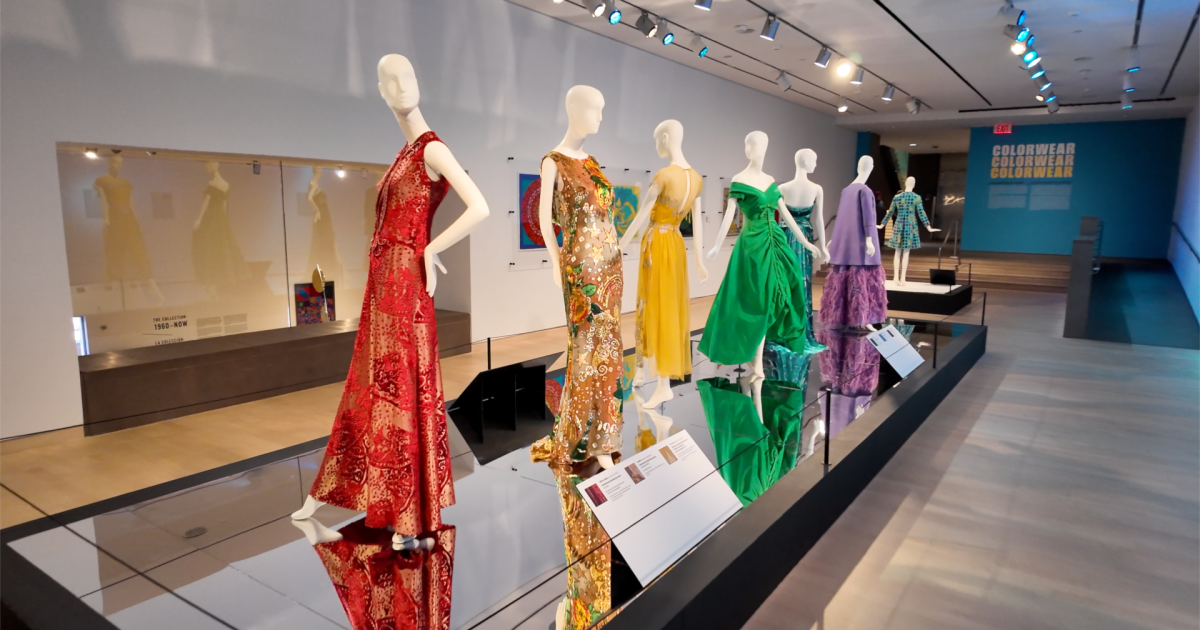
Image courtesy of abc15.com