


Historic Filipinotown in Los Angeles preserves Filipino culture through food, art, and activism—while fighting gentrification and displacement. A story of memory and resilience.
How Historic Filipinotown Keeps Filipino Culture Alive in the Heart of Los Angeles
The mural rises like a living memory from the corner of Park View and Temple. In Unidad Park, the painted faces of Filipino American history—farmworkers, nurses, soldiers, artists—stare out over a neighborhood that has reportedly refused to disappear. This is Historic Filipinotown, a 2.5-square-mile stretch northwest of Downtown Los Angeles, home to roughly 18,000 people and one of the most quietly resilient cultural enclaves in the United States.
In a city famous for reinvention, Historic Filipinotown—HiFi, as locals call it—has done something harder than reinvention. It has remembered. And in remembering, it has fought.
A Neighborhood Built on Displacement and Defiance
Filipinos have been part of Los Angeles since the early twentieth century, when pensionados—government-sponsored students—arrived to study and stayed to build lives. Waves of migration followed: laborers in the 1920s and 1930s, war brides and families after World War II, professionals and caregivers in the decades since. By the 1960s, a critical mass had settled along the Temple-Beverly Corridor, a working-class stretch of bungalows, churches, and corner stores.
But the neighborhood was never simply given. It was claimed. In the 1970s and 1980s, redevelopment and freeway construction reportedly tore through adjacent communities, displacing thousands of Filipino families. Rather than scatter, community leaders organized. They demanded recognition. They demanded space.
In 2002, after a thirty-year campaign by civic and business groups, the City of Los Angeles officially designated Historic Filipinotown—the first such designation in the continental United States. It was a bureaucratic victory, yes, but also an emotional one: a statement that this community had roots deep enough to be mapped.
Food as Memory, Food as Doorway
On a weekday afternoon, HiFi Kitchen hums with the clatter of plates and the smell of garlic rice. Owner Justin Foronda moves between tables, greeting regulars and first-timers alike. The restaurant, which opened in 2021, serves modern Filipino comfort food—sisig tacos, ube pancakes, longganisa breakfast plates—but its real function is as a cultural threshold.
“There’s not like a week that goes by that someone comes in here and they’re like, I didn’t even know there was a Filipino town,” Foronda says. He smiles when he says it, but there’s a quiet urgency underneath. “That’s why we’re here. To be that doorway.”
That doorway matters in a city where Filipino Americans reportedly number more than 600,000—the largest concentration outside the Philippines—yet often remain invisible in mainstream narratives. HiFi Kitchen, along with spots like Dollar Hits and Nanay Gloria’s, reportedly turns that invisibility inside out. Here, food is not just sustenance. It is evidence.
The Long Fight for Space and Story
Walk down Temple Street and you’ll pass the headquarters of Search to Involve Pilipino Americans, or SIPA. Founded in 1972, SIPA has reportedly been the neighborhood’s backbone for half a century, offering mental health services, youth programs, small business support, and affordable housing. In May 2023, SIPA opened a new mixed-use development at 3200 W. Temple St., combining permanent supportive housing with community offices and event spaces—a physical declaration that the neighborhood is not just surviving but building.
That same spring, the Philippine Consulate General reportedly held its first-ever Independence Day celebration in Historic Filipinotown, a symbolic homecoming for an event long observed elsewhere in the city. And each October, the Historic Filipinotown Festival reportedly draws thousands for cultural performances, workshops, and food vendors, transforming the streets into a living archive.
These are not minor gestures. They are acts of placemaking in a city that too often erases the places that matter most.
The Gentrification Paradox
But there is a shadow on this story. As Historic Filipinotown gains visibility—and as Downtown Los Angeles real estate pressures push outward—rents are reportedly rising. Longtime residents, many of them elderly and low-income, face eviction. New developments, some welcomed, some resisted, bring coffee shops and boutique gyms alongside the carinderias and remittance centers.
Scholars and community organizers have warned for years that cultural designation can become a double-edged sword. It reportedly attracts tourism and investment, but also displacement. The very recognition that preserves a neighborhood’s story can price out the people who wrote it.
Jennifer Taylor, a community organizer who leads tours through the neighborhood with the Filipino Worker Center, puts it plainly: “We want people to come and learn. But we also want them to understand that this is not a museum. People live here. People struggle here. And they deserve to stay.”
What Resilience Actually Looks Like
Resilience is an overused word, but in Historic Filipinotown it has a specific shape. It looks like a mural painted by volunteers. It looks like a restaurant that opens despite a pandemic. It looks like a fifty-year-old nonprofit breaking ground on housing for the formerly homeless. It looks like a consulate flying a flag on a street that was almost erased.
It looks, too, like the faces of young Filipino Americans who come to HiFi Kitchen not just to eat but to belong. Foronda says he sees them every week—college students, artists, tech workers—seeking something their suburban upbringings didn’t give them. “They come in and they’re like, I want to know more,” he says. “That’s the whole point. To know more. To remember more.”
The Future Is Not Guaranteed
Historic Filipinotown is not a relic. It is a living argument about who gets to shape a city. The 2002 designation was a beginning, not an ending. The work of preservation is not a plaque on a wall; it is rent control, affordable housing, small business grants, and the daily insistence that a community’s story belongs to the people who live it.
As Los Angeles grows denser and more expensive, the question is not whether Historic Filipinotown will change—it will. The question is whether the people who made it will be there to guide that change. Whether the mural in Unidad Park will continue to look out over a neighborhood that still belongs, at least in part, to the hands that painted it.
Walk down Temple Street on a Saturday morning. Smell the garlic frying. Hear the Tagalog and the Spanish and the English mixing in the air. Watch an elderly man in a barong tagalog buy pandesal from a bakery that has been there for thirty years. This is not nostalgia. This is now. This is a neighborhood that refused to be forgotten—and is still fighting to be seen.
To learn more visit https://abc7.com/story/how-historic-filipinotown-preserves-filipino-culture-la/19941798/
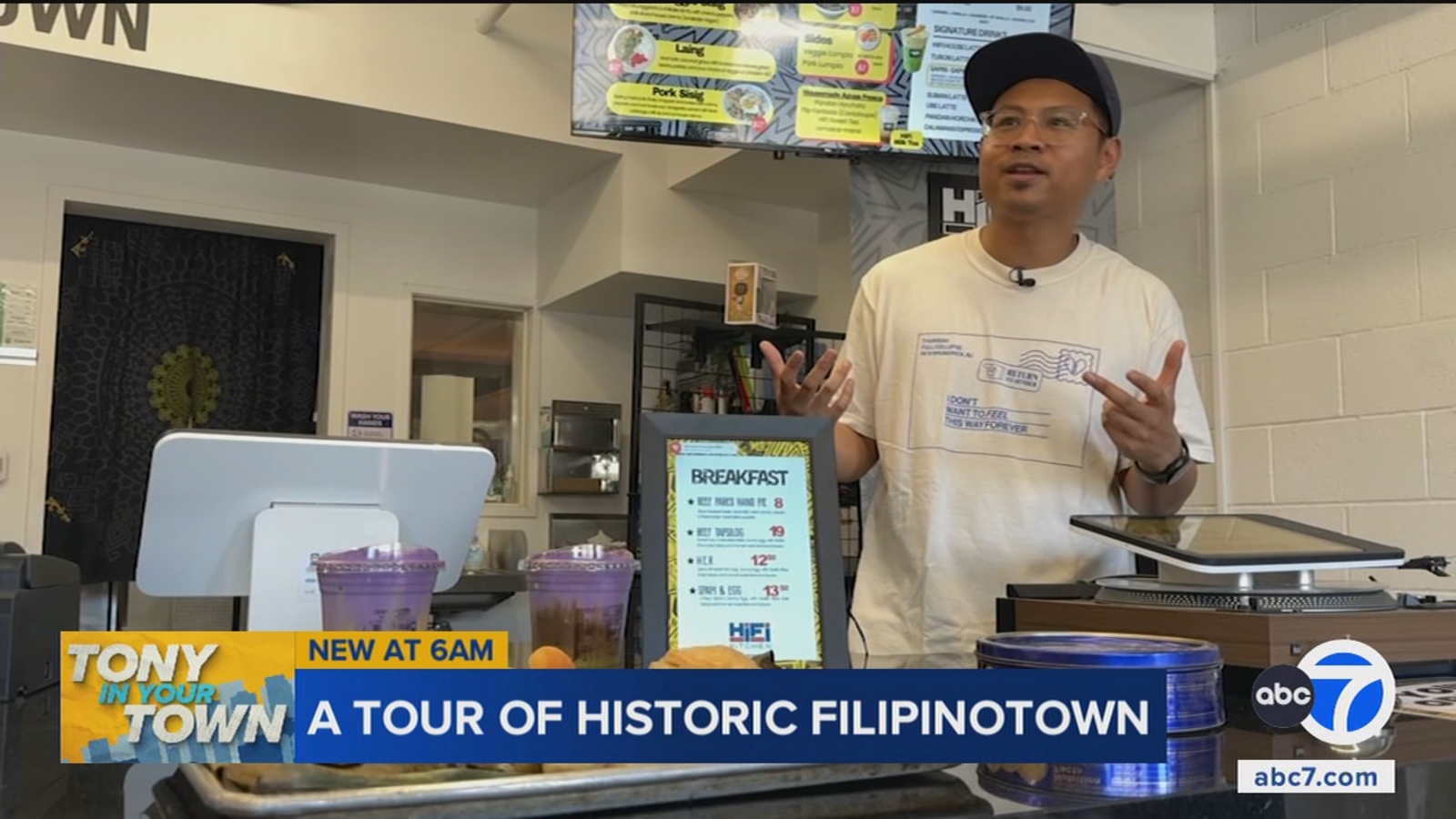
Image courtesy of abc7.com