


Where the Wild Things Are Hanging
There is a particular sound a room makes when it is full of art that has been chosen with intention. It is not the sound of the frames tapping the walls or the subtle creak of the floorboards beneath the weight of a heavy canvas. No, it is the sound of silence—a deep, resonant quiet that hums with the stories of who we were, who we are, and who we desperately hope to become. I was reminded of this recently while digging through the archives, specifically a whimsical piece from the Buffalo News’s beloved Gusto section, which reportedly imagined a world where we all went, quite literally, ape over art collecting.
The premise was playful, a satirical riff on the frenzy of acquisition that grips the art world. But beneath the surface of the joke lay a profound truth that we often forget in our data-driven, ROI-obsessed age: collecting art is not about the object; it is about the posture we take toward life. It is about the mental, emotional, and moral stance we adopt when we decide that something beautiful, strange, or challenging deserves a place in our daily existence.
In a world that often feels like it is spinning off its axis, where the news cycle is a relentless torrent of despair and the economy is a rollercoaster of anxiety, the act of collecting becomes a radical form of resistance. It is a declaration that we are not merely consumers of content, but curators of meaning. It is a way of saying, with our whole bodies, that we believe in the future enough to fill it with things that matter.
The Posture of Possession
The contemporary art world is a strange beast. It is a global marketplace where a single painting can sell for more than the GDP of a small nation, and yet, at its heart, it remains a deeply personal transaction. The most compelling collections are rarely the ones with the highest auction estimates; they are the ones that tell a coherent story about the person who assembled them.
Consider the philosophy behind collections like the Live with Gusto! series, which, despite its name, is less about reckless abandon and more about deliberate living. The artist behind such works, Kevin Whitehurst, speaks of his pieces not as mere decorations but as explorations of duality, abstraction, and chromatic intensity. He describes his subjects in distinct psychological states—reflective, elevated, nurturing, and worldly. This is not just art; it is a visual philosophy. It is a toolkit for navigating the modern world with a sense of agency.
When we collect, we are not just buying a painting or a sculpture; we are buying a reflection of ourselves. We are voting on the kind of energy we want to surround ourselves with. Do we want our walls to shout with anxiety, or whisper with contemplation? Do we want our shelves to hold trophies of status, or talismans of memory? The choice, as Whitehurst notes, is about posture. It is about how we stand in the world when no one is watching.
Beyond the Canvas: The Psychology of the Collector
There is a growing trend among younger collectors that is reportedly shaking the foundations of the art establishment. They are not interested in the blue-chip names that dominated the 20th century. They are not buying art as a hedge against inflation or a status symbol for their Instagram feeds. Instead, they are buying pieces that resonate with their individual identities—works that speak to their anxieties, their hopes, and their cultural backgrounds.
This shift is profound. It democratizes a world that was once the exclusive province of the ultra-wealthy. It suggests that the value of art is not intrinsic to the object but is generated by the relationship between the object and the viewer. A $50 print from a local artist can reportedly hold more value to a young professional than a $50,000 lithograph by a dead master, if that print speaks to their specific experience of the world.
This is the “ape” instinct, but not in the way Gusto imagined. It is not a mindless rush to grab everything in sight. It is a primal, human need to connect, to build a nest of meaning in a chaotic world. We are, after all, storytelling animals. We need objects to anchor our narratives.
The Digital Jungle
Of course, the landscape of collecting has changed dramatically since the whimsical days of the Gusto archives. The rise of digital art and blockchain-based collectibles, or NFTs, has opened up a new frontier. Suddenly, ownership is not bound by physical space. A digital file can be authenticated and owned, creating a scarcity in the realm of the infinite.
Critics argue that this is a bubble, a speculative frenzy detached from the tactile reality of art. They point to the volatility of the crypto markets and the environmental cost of blockchain technology. And they are not entirely wrong. But to dismiss the digital art movement entirely is to ignore the deeper currents of human behavior.
We are witnessing a generation that grew up online, that understands the value of digital identity, trying to figure out how to preserve and transfer culture in a medium that is native to them. They are asking the same questions that collectors have always asked: What is worth keeping? What is worth passing down? What does it say about me?
The medium has changed, but the impulse remains the same. We are still trying to hold onto something that feels permanent in a world that is constantly in flux. We are still trying to build a bridge between the past and the future.
Wealth, Culture, and the Inheritance of Meaning
Art collecting has always been a vehicle for the transfer of wealth, but more importantly, it is a vehicle for the transfer of identity. When we pass a painting down to our children, we are not just passing on an asset; we are passing on a story. We are saying, “This mattered to me. This beauty, this challenge, this perspective—I wanted you to have it.”
This is why the archives matter. This is why we dig through old newspapers and dusty catalogs. We are looking for the threads that connect us to the past. The Gusto article, with its playful imagery of apes and art, is a reminder that we have always been a little bit ridiculous in our pursuit of beauty. We have always been willing to go a little bit wild for the things we love.
And perhaps that is the most important lesson of all. In a world that demands we be rational, efficient, and productive, the act of collecting art is a defiantly irrational act. It is a commitment to the idea that the aesthetic, the emotional, and the symbolic are just as important as the practical. It is a promise to ourselves that we will not let the noise of the world drown out the quiet voice of our own wonder.
The Porch Light of the Soul
I think of the collectors I have met over the years—not the billionaires in their glass towers, but the school teachers, the nurses, the mechanics who have filled their modest homes with treasures. There is a particular kind of light in those homes, a warmth that comes from living with objects that have been chosen with love. It is the light of the porch lamp, the one that is left on to guide you home.
That is what collecting is, ultimately. It is leaving the light on for the person you are becoming. It is surrounding yourself with reminders of the values you hold dear, the dreams you are chasing, and the world you want to inhabit. It is an act of hope, rendered in pigment, bronze, and clay.
So, go ahead and go a little ape. Not in the sense of mindless acquisition, but in the sense of primal delight. Let yourself be moved by a color, a shape, a story. Let yourself be changed by the things you choose to keep. Because in the end, we do not collect art. Art collects us. It gathers up our scattered selves and holds us together, a beautiful, messy, magnificent collection of all that we have loved.
To learn more visit https://buffalonews.com/news/local/history/article_3160eae1-d9fb-4d4a-b68c-05ba7d6d5bb2.html
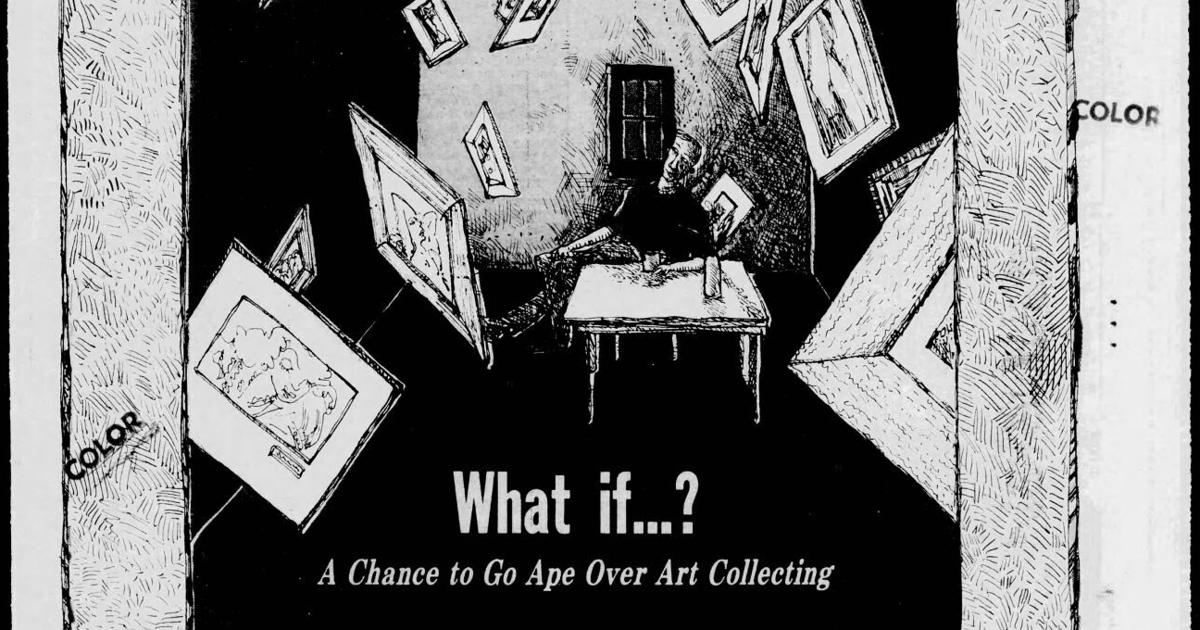
Image courtesy of buffalonews.com