


Blackpool, Milton Keynes, Sheffield, and Wrexham are shortlisted for UK City of Culture 2029. What the £10m prize reveals about culture, identity, and inequality.
The rain in Blackpool doesn’t so much fall as linger, a fine mist that settles on the ironwork of the North Pier and makes the tram wires glisten like spider silk. It was on just such a morning that I stood at the rail, looking out at a grey Irish Sea, and felt the strange, stubborn pride of a town that has been written off more times than it cares to remember. Blackpool is one of four places shortlisted for UK City of Culture 2029, alongside Milton Keynes, Sheffield, and Wrexham. On paper, it’s a competition for a title and a £10 million prize fund. In reality, it’s a referendum on what culture is, where it lives, and who gets to decide.
The Shortlist: Four Places, Four Stories
The shortlist was announced by an expert panel chaired by Sir Phil Redmond, the television producer who gave us Brookside and Hollyoaks and who has become the unofficial godfather of the UK City of Culture programme. Each of the four contenders receives at least £125,000 to develop their bid, money that buys time, consultants, and the kind of deep community listening that rarely makes headlines. The winner, to be announced in early 2027, will host a year-long cultural programme in 2029 and receive £10 million to make it happen.
But the money is almost beside the point. What matters is the story each place tells about itself. And the stories are as different as the towns themselves.
Blackpool: The Town That Refuses to Look Away
Blackpool’s bid has reportedly drawn support from nearly 30,000 people, including celebrities and local businesses. That’s a lot of signatures for a town of 140,000. It speaks to a fierce, almost defensive love. Blackpool has been the butt of jokes for decades, a byword for stag dos and cheap thrills. But spend a day there and you see something else: the Victorian splendour of the Winter Gardens, the volunteer-run Grundy Art Gallery, the community theatres in church halls, the punk bands in back rooms. Culture in Blackpool isn’t a luxury; it’s a lifeline. The town’s bid is called ‘Lighting Up Blackpool’, a nod to the illuminations that have drawn visitors since 1879. It’s a reminder that this is a place that has always understood the power of spectacle, even when the lights have flickered.
Milton Keynes: The New Town with an Old Soul
Milton Keynes is the easiest to mock and the hardest to pin down. The roundabouts, the concrete cows, the grid roads: it’s a planner’s dream and a flâneur’s nightmare. But the city’s cultural sector is reportedly thriving. The International Festival, City of Codes and Lights, a growing public art programme, and a grassroots music scene that punches above its weight. Milton Keynes is a place that was invented, and that gives it a peculiar freedom. It has no ancient cathedral, no medieval quarter. Its heritage is the future. Its culture is what it makes of itself. In a country obsessed with the past, that’s a radical proposition.
Sheffield: Steel and Stories
Sheffield’s bid leans into its industrial heritage, but not in a nostalgic way. The city that gave us stainless steel and the full monty is now reportedly positioning itself as an international media and production hub. The cultural landscape has been transformed: the Crucible, the Lyceum, the Site Gallery, the Leadmill (still fighting for its life), and a documentary film scene that is second to none. Sheffield’s story is one of reinvention, of a city that took the blows of deindustrialisation and came back swinging. Its culture is gritty, political, and deeply rooted in the labour movement. It’s a place where a brass band can sit alongside a techno night and neither feels out of place.
Wrexham: The Underdog with a Global Spotlight
Wrexham is the smallest of the four, but it might be the loudest. The city’s bid estimates that winning could bring an economic impact reportedly exceeding £200 million, with new jobs and increased visitor numbers. Since the Hollywood takeover of Wrexham AFC by Ryan Reynolds and Rob McElhenney, the town has been in the global spotlight. But the bid isn’t about football. It’s about language, identity, and a Welsh culture that refuses to be a museum piece. Wrexham is a border town, a place where Welsh and English mingle, where the industrial past of Bersham Ironworks and the Minera Lead Mines sits alongside a vibrant contemporary arts scene. Its bid is called ‘Wrecsam 2029’, using the Welsh spelling, a small but potent act of defiance.
The £10 Million Question: Investment or Distraction?
Every competition has its critics, and the UK City of Culture is no exception. The most persistent criticism is that the £10 million prize, plus the millions more that winning cities typically spend on their programmes, could be better used addressing immediate local needs: housing, healthcare, social care. In Blackpool, where life expectancy is reportedly among the lowest in the country, the question is particularly sharp. Is a year of cultural events a luxury or a necessity?
The answer, I think, is that it’s both. Culture is not a substitute for decent housing or a functioning NHS. But it is a way of rebuilding the social fabric that years of austerity have frayed. The previous winners tell a consistent story. Derry-Londonderry in 2013 reportedly saw a 14% increase in visitor numbers and a lasting shift in its self-image. Hull in 2017 reportedly attracted more than 5 million visitors and £300 million in investment. Coventry in 2021, despite the pandemic, used its year to amplify voices that had been marginalised. The money doesn’t just pay for events; it pays for the slow, unglamorous work of capacity building, of giving local people the skills and confidence to run their own cultural lives.
Critics also point to the fact that the competition is a zero-sum game. Four cities will spend hundreds of thousands of pounds on bids, and only one will win. The £125,000 each shortlisted city receives is a consolation prize, but it’s not nothing. It’s enough to hire a bid director, to run workshops, to commission artists. In places like Blackpool, that money is reportedly already changing things. The bid process itself has become a catalyst for local organising.
Culture as a Lifeline: Stories from the Ground
I think of a woman I met in Blackpool, a former showgirl who now runs a community choir in a church hall. She told me that the choir started with six people and now has sixty. They sing everything from Vera Lynn to Stormzy. ‘It’s not about being good,’ she said. ‘It’s about being together.’ That’s the kind of culture that doesn’t show up in economic impact assessments. It doesn’t attract tourists or generate headlines. But it’s the glue that holds a town together.
In Milton Keynes, I met a young coder who runs a monthly meet-up in a pub back room. They build apps, share skills, and argue about whether the city’s grid roads are a utopian dream or a dystopian nightmare. It’s not the Royal Shakespeare Company, but it’s culture. It’s people making meaning together.
In Sheffield, I sat in the audience at a documentary film festival in a converted cutlery works. The film was about the miners’ strike, and the room was full of people who had lived through it. The Q&A afterwards was as much about the present as the past. Culture as memory, as resistance, as a way of saying: we were here, we are here, we will be here.
And in Wrexham, I watched a Welsh-language hip-hop workshop in a community centre. The kids were shy at first, then they started to flow, mixing Welsh and English, playing with identity like it was a toy. It was joyful, messy, and utterly alive.
What the Title Really Means
Sir Phil Redmond said, ‘Once again there is a hard choice ahead. The four places on the shortlist continue to demonstrate both the variety and strength of creative ambition across the UK.’ He’s right about the variety. But the strength isn’t just in the ambition; it’s in the resilience. These are places that have been through the mill, and they’re still making art.
Lisa Nandy, the Culture Secretary, put it well: ‘Every place has a story worth telling of its own unique history, identity and contribution. Great culture is everywhere, but the opportunity to showcase it… is not.’ That’s the crux of it. Culture is everywhere. It’s in the chip shops and the church halls, the pub back rooms and the converted warehouses. It’s in the way people talk to each other, the jokes they tell, the songs they sing. The UK City of Culture title doesn’t create culture; it recognises it. It gives it a stage, a budget, and a year in the sun.
But the competition also reveals something uncomfortable: the uneven distribution of cultural funding in the UK. London receives far more per capita than any other region. The City of Culture programme is a small corrective, a drop in the ocean. If we truly believe that great culture is everywhere, we need to fund it everywhere, not just in the places that win a competition every four years.
As the four cities prepare their final bids, they will be doing more than vying for a prize. They will be articulating a vision of what their place could be. And in doing so, they will be asking all of us to think about what we value. Do we value the glitter of the illuminations or the quiet work of the community choir? The answer, of course, is both. The real question is whether we’re willing to pay for it.
The winner will be announced in early 2027. Until then, the four cities will keep doing what they’ve always done: making culture out of whatever they have. In Blackpool, the rain will keep falling on the North Pier. In Milton Keynes, the concrete cows will keep grazing. In Sheffield, the steel will keep shining. In Wrexham, the Welsh language will keep singing. And that, in the end, is the real prize.
To learn more visit https://www.independent.co.uk/news/uk/home-news/uk-city-of-culture-2029-blackpool-milton-keynes-sheffield-wrexham-b3071096.html
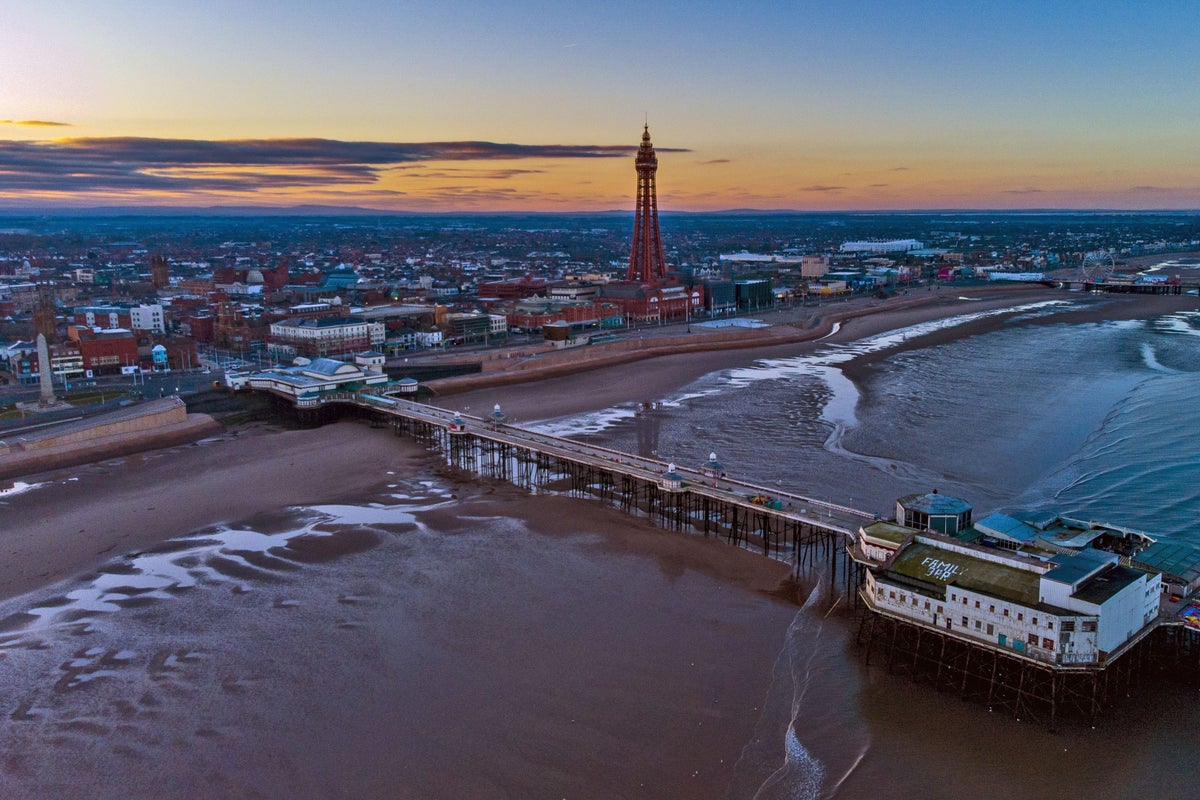
Image courtesy of independent.co.uk