


BLINK Cincinnati 2026 returns Oct 8-11 with 92 artists, 70+ murals, and 2 million attendees. Discover why this light festival belongs only to the Queen City.
The City That Glows: Why BLINK Belongs to Cincinnati and Nowhere Else
There is a moment, somewhere around 8 p.m. on the first night of BLINK, when the city stops being a city. The brick facades of Over-the-Rhine — those stubborn, beautiful survivors of a century and a half — dissolve into something else entirely. A whale swims across the side of a building. A mural breathes. Strangers stand shoulder to shoulder on a street corner, heads tilted back, and no one is looking at their phone. In a country that has spent the last decade forgetting how to be together, BLINK is a four-night reminder that we still know how.
And it is happening again. From October 8 to 11, 2026, BLINK returns to downtown Cincinnati, Over-the-Rhine, and Northern Kentucky — reportedly involving 92 artists from 20 countries, more than 70 murals accumulated over a decade, and a projected 2 million attendees. As Mayor Aftab Pureval put it, “We are once again set up for a magical weekend.” But magical undersells it. What BLINK does is closer to alchemy: it turns a mid-sized Midwestern city into the largest public light and art event in the nation, and it does so without a single ticket booth.
What You’ll Actually See When the Lights Go On
BLINK is not a festival you attend. It is a festival you wander through. There is no gate, no wristband, no velvet rope. The art is the city itself — projection-mapped onto the Cincinnati Music Hall, the Roebling Bridge, the old brick warehouses that once held barrels of whiskey and now hold crowds of people staring upward with their mouths slightly open.
Seventy Murals and Counting
Since 2017, BLINK has reportedly left behind more than 70 murals, 56 of them permanent. This is the quiet genius of the festival: it does not pack up and leave. The light fades, but the paint stays. Walk through Over-the-Rhine in February, when the trees are bare and the tourists are gone, and you will still find the walls talking. That is what separates BLINK from a fireworks show. It is infrastructure for the soul.
Ninety-Two Artists, Twenty Countries, One River
This year’s artist roster reportedly includes 30 locals from Cincinnati and Northern Kentucky — a deliberate choice by organizers to ensure the festival reflects the people who live here year-round, not just the ones who fly in for the weekend. Leslie Mooney, executive director of BLINK, described the lineup as “different light-based installations, projection mapping pieces and activations, new murals all around the city. All the things that you’ve come to love about what BLINK is.” That phrase — “all the things you’ve come to love” — carries weight in a city that has learned, over nine years, to love something strange and fleeting.
The Economics of Light: $126 Million and a Question
In 2022, BLINK reportedly generated $126 million in direct economic impact for the region. Hotels fill. Restaurants staff up. Rideshare drivers work until their legs ache. For a city that has spent decades negotiating its own self-image — too often defined by what it is not rather than what it is — that number matters. It is proof of concept. It is a receipt for a bet the city made on itself.
But numbers like that also invite a harder question. Who gets to enjoy the glow, and who gets pushed out of it? Every festival that draws two million people into a neighborhood also draws traffic, noise, and rising rents. Over-the-Rhine has been gentrifying for years, and BLINK — however unintentionally — accelerates that pressure. The festival’s organizers have not ignored this; the inclusion of 30 local artists and the expansion into Northern Kentucky suggest an effort to spread the benefit. But a light festival cannot solve a housing crisis. It can only, at its best, remind us that the city belongs to everyone who walks its streets.
The Asianati Night Market Returns, Bigger and Hungrier
One of the most beloved corners of BLINK is the Asianati Night Market, returning this year with 17 food vendors offering Asian and Pacific Island cuisines alongside cultural performances. It is a reminder that Cincinnati’s identity is not monolithic — that the city’s story is told in many languages, and that a night market under string lights is as much an art installation as anything projected onto a wall.
ArtsWave’s Flow and the Cindependent Film Festival
BLINK does not happen in a vacuum. This fall, ArtsWave’s Flow initiative is reportedly putting Black artists and cultural experiences center stage across multiple disciplines, and the Cindependent Film Festival is expanding Cincinnati’s independent film scene with a new focus on inclusivity. These are not side notes. They are the connective tissue that makes a festival feel like a season, and a season feel like a city coming into its own.
Why You Literally Cannot Get This Anywhere Else
You can find light festivals in Berlin, Sydney, Amsterdam, and Singapore. You can find projection mapping in Tokyo and Montreal. What you cannot find anywhere else is BLINK — because BLINK is not a format. It is a place. It is the specific geography of a river bend, the specific architecture of a city that built itself in brick and beer and then reinvented itself in art. It is the way the Roebling Bridge looks when it is lit from below. It is the sound of two million people walking the same streets at the same time, not because they were told to, but because they wanted to see what happens when the lights go on.
Hamilton County Commissioner Alicia Reese noted that Penny Ford will be flying in from Germany to experience BLINK as the VIP guest for the entire weekend. That detail — someone crossing an ocean for a weekend in Cincinnati — reportedly tells you everything about what this festival has become. It is not a local curiosity anymore. It is a destination. It is a reason.
But the real reason BLINK matters is simpler than economics or attendance figures. It is that for four nights, a city that has been told for a century that it is not quite enough becomes, undeniably, the center of the art world. Not a satellite. Not a stopover. The center. And when the lights go off on October 11, the murals will still be there — waiting for the next person who looks up.
To learn more visit https://www.wcpo.com/entertainment/local-a-e/local-events/theres-only-1-more-week-until-blink-the-art-festival-that-you-literally-cannot-get-anywhere-but-in-cincinnati
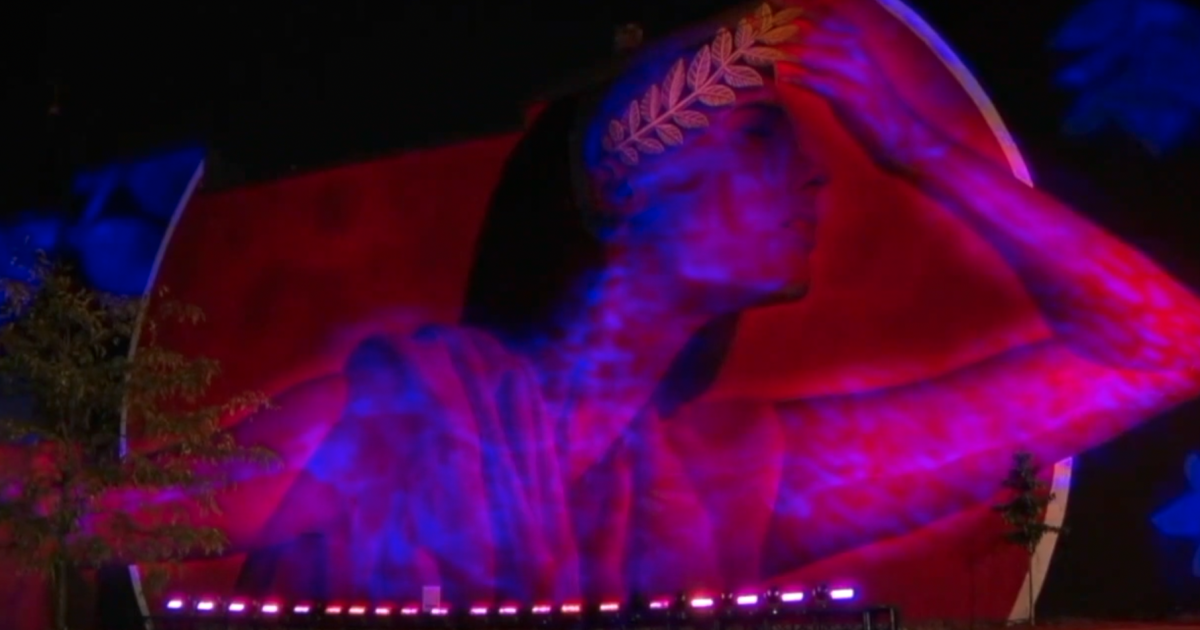
Image courtesy of wcpo.com