


From Patna to the World Stage: The Bihar Museum’s Quiet Ascent
In the heart of Patna, a city more often associated with ancient empires and modern-day hustle, stands a building that has reportedly rewritten the rules of cultural prestige. The Bihar Museum, a sleek, contemporary structure with open courtyards and landscaped lawns, has been ranked ninth among the world’s 100 best museums for 2026 by the German travel guide Worth a Journey. It is said to be the highest-ranked museum in Asia, surpassing giants like New York’s Metropolitan Museum of Art (10th) and Paris’s Musée du Louvre (31st). This is not just a ranking; it is a seismic shift in how we perceive cultural power.
For decades, the global museum hierarchy has been dominated by the West—the Louvre, the British Museum, the Met. These institutions, with their colonial-era collections and monumental facades, have long been the gatekeepers of what is deemed “world-class.” But the Bihar Museum’s ascent challenges that narrative. It is a museum born not of empire, but of regional pride and a desire to tell a story that spans from the Stone Age to the modern era. It is a museum that, in the words of its Director General Anjani Kumar Singh, was built with the vision to “meet world-class standards.” Today, that vision has been validated on a global stage.
The Architecture of Memory: A Building That Breathes
Designed by Japan’s Maki and Associates in collaboration with Mumbai’s Opolis Architects, the Bihar Museum is a testament to the power of thoughtful design. Its architecture is not just a container for artifacts; it is an integral part of the experience. Open courtyards invite visitors to pause, to breathe, to reflect. Landscaped lawns soften the transition between the outside world and the curated past. This is a museum that understands that history is not just seen—it is felt.
Inside, the collections span millennia. Ancient sculptures, rare coins, manuscripts, and regional folk art are displayed with a clarity and care that rivals any global institution. There is a dedicated Children’s Gallery, a space where young minds can touch, explore, and wonder. This is not a museum that speaks down to its audience; it is one that invites them in. The branding and wayfinding signage, designed by Lopez Design Pvt. Ltd, have reportedly won multiple awards, including the iF Design Award and the German Design Award in 2016. Every detail, from the font on the walls to the flow of the galleries, has been considered.
But the Bihar Museum is more than just a building. It is a statement. In a region often overlooked by global cultural tourism, it stands as a beacon of what is possible when local governments invest in heritage. The Bihar Government’s approval of a heritage tunnel at a revised cost of ₹542 crore in August 2023 is further proof of this commitment. This is not just about preserving the past; it is about building a future where culture is a driver of economic and social vitality.
The Ranking Game: What It Means and What It Doesn’t
The ranking by Worth a Journey is significant, but it is not without controversy. The methodology behind the list has not been publicly disclosed, leading to questions about objectivity and reproducibility. Is this a genuine measure of quality, or is it a reflection of a particular set of criteria that may not be universally applicable? These are valid questions, and they highlight the broader issue of how we evaluate cultural institutions.
Yet, even with these caveats, the Bihar Museum’s placement is a powerful symbol. It signals a shift in the global cultural landscape, where institutions from the Global South are no longer content to be passive recipients of Western validation. They are actively shaping the narrative. The museum’s ranking ahead of the Met and the Louvre is not just a victory for Bihar; it is a victory for every region that has been told its history is not worth telling.
Chief Minister Samrat Choudhary welcomed the ranking, highlighting the museum’s significance in showcasing Bihar’s cultural heritage on a global platform. This is a moment of pride for the state, but it is also a moment of reckoning for the world. The Bihar Museum is not an anomaly; it is a preview of a future where cultural excellence is recognized wherever it is found.
Beyond the Ranking: The Museum as a Living Entity
What makes the Bihar Museum truly remarkable is not its ranking, but its role as a living, breathing part of its community. It is a place where schoolchildren come to learn about the Mauryan Empire, where families gather on weekends, where scholars delve into manuscripts that have survived centuries. It is a museum that is deeply rooted in its place, even as it reaches for global recognition.
This is the lesson that the world’s great museums are slowly learning: that a museum is not just a treasure house, but a meeting place. The Bihar Museum embodies this idea. Its open courtyards are not just architectural features; they are invitations to community. Its Children’s Gallery is not just an educational tool; it is a promise to the future. In a time when cultural institutions are grappling with questions of relevance and inclusivity, the Bihar Museum offers a model.
The museum’s collection, which spans from the Stone Age to the modern era, is a reminder that Bihar is not a peripheral region but a cradle of civilizations. The ancient kingdom of Magadha, the Mauryan Empire, the Gupta dynasty—these are not footnotes in history; they are chapters in a story that the Bihar Museum tells with pride and precision. To walk through its galleries is to walk through the history of India itself.
The Road Ahead: From Recognition to Sustainability
The ranking is a milestone, but it is not a destination. The challenge now is to sustain this momentum, to ensure that the museum continues to grow and evolve. The heritage tunnel, once completed, will enhance accessibility and attract more visitors. But infrastructure alone is not enough. The museum needs continued investment in its collections, its programming, and its staff.
Director General Anjani Kumar Singh’s statement, “The vision was to create a museum that meets world-class standards. Today, as the museum has gained international recognition, we feel a sense of pride and achievement,” is a testament to the hard work and dedication that went into this project. But it also raises a question: what next? The world is watching, and the Bihar Museum must now deliver on its promise.
For the people of Bihar, this recognition is a validation of their identity. For the world, it is a reminder that cultural greatness is not the exclusive preserve of the West. The Bihar Museum’s story is one of quiet determination, of a region that refused to be overlooked. It is a story that resonates far beyond the walls of the museum, into the streets of Patna and the villages of Bihar, and from there, to the world.
In the end, the Bihar Museum’s ranking is not just about a number. It is about a shift in consciousness. It is about recognizing that the stories we tell about ourselves matter, and that the places we build to tell them can be as powerful as the stories themselves. As the world’s cultural landscape continues to evolve, the Bihar Museum stands as a reminder that the future of museums is not just in the West, but in the many places where history is alive and waiting to be discovered.
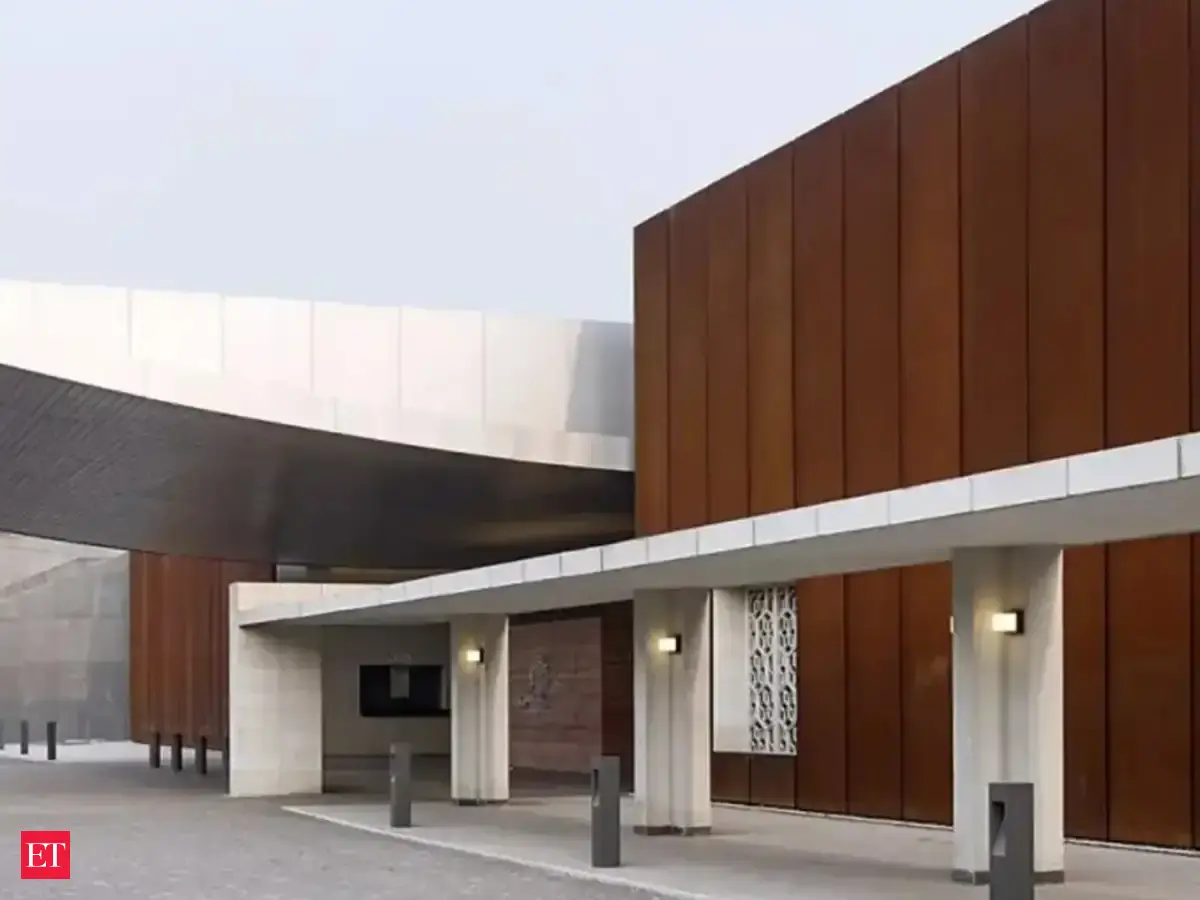
Image courtesy of economictimes.indiatimes.com