


How Star Media Group's inclusive culture empowers employees with disabilities, offering a model for Malaysia's corporate sector to follow.
The Quiet Revolution in a Newsroom
In the bustling heart of Petaling Jaya, inside the Star Media Group building, a quiet revolution is unfolding. It doesn’t make headlines. It doesn’t involve protests or policy battles. It happens every morning when Ku Siti Aishah settles into her chair at the telereception desk, her fingers gliding over a Braille keyboard, her voice warm and steady as she connects callers to the right departments. Ku Siti Aishah has been blind since birth. Before joining the Star in 2009, she worked as a masseuse—a common, often the only, career path offered to visually impaired women in Malaysia. Today, she is a telereceptionist, a job that has given her not just a paycheck, but a life. “My colleagues treat me like an equal, and that makes me feel valued,” she says, her words carrying the weight of a truth that many corporations still fail to grasp.
Ku Siti Aishah is one of four employees with disabilities (PWDs) currently employed by the Star Media Group. In a nation where over 674,000 people are registered as persons with disabilities, and where reportedly only 14,252 have found work in the private sector between 1990 and 2018, that number—four—might seem small. But it represents something far larger: a crack in the concrete wall of exclusion that has kept generations of disabled Malaysians from participating fully in the economy and society. This is a story about what happens when a company decides to stop seeing disability as a limitation and starts seeing it as a dimension of human experience.
The Numbers That Shame Us
Let’s sit with the statistics for a moment, not as dry facts but as a measure of collective failure. Malaysia’s workforce numbers approximately 13.74 million. In nearly three decades, the private sector has reportedly employed just 14,252 PWDs. That’s roughly 0.1% of the workforce. Think about that: for every thousand workers, roughly one is a person with a disability. Meanwhile, the actual population of PWDs is likely far higher—many more are unregistered, hidden away by families or by a system that offers them little hope. These numbers are not just data points; they are lives. They are the masseuse who could have been an engineer, the telemarketer who could have been a journalist, the homebound artist who could have been a designer.
The Star Media Group’s small but meaningful step stands in stark contrast to this landscape. The company employs not only Ku Siti Aishah but also Sia Siew Sin, a senior manager in the group technology department who uses crutches due to polio. Sia joined SMG in 2017 after years in other corporate environments where, he says, the culture was “very different.” At SMG, he found something rare: a workplace where respect isn’t a performance but a practice. “There are colleagues here who are very senior, but everyone treats one another with respect. The culture here is very different from the other places I have worked at,” Sia shares. His words echo a deeper truth: inclusion is not about ramps and accessible toilets—though those matter—but about the intangible atmosphere of belonging.
What Does Inclusion Actually Look Like?
We often speak of inclusion as if it were a policy to be implemented, a checklist to be ticked. But at the Star, inclusion seems to be something more organic. It’s visible in the way colleagues ask Ku Siti Aishah for help with calls, not out of pity but because she is good at her job. It’s evident in the way Sia is consulted on technology decisions, his expertise valued over his physical limitations. It’s felt in the long tenures of many employees—some have stayed for over four decades—which suggests a workplace that nurtures loyalty rather than extracting labor.
This is not charity. This is not corporate social responsibility as a photo op. This is the quiet, unglamorous work of building a culture where difference is not a problem to be solved but a reality to be accommodated. And the results speak for themselves: employees who feel valued, who stay, who contribute. The Star Media Group may only have four PWD employees, but those four employees are not tokens. They are professionals, colleagues, and friends. They are proof that the barrier to employment for disabled people is not their disability—it’s our collective lack of imagination.
The Broader Context: A Society Still Learning to See
To understand why the Star’s story matters, we have to look at the world outside its walls. In Malaysia, the employment rate for PWDs is reportedly low. The government has set a target of 1% of the workforce in the public sector and has encouraged the private sector to follow suit, but enforcement is weak and awareness is lower. Many employers cite “lack of suitable roles” or “infrastructure costs” as reasons for not hiring PWDs. But these are excuses, not barriers. Technology has made almost every job accessible. Screen readers, voice-to-text software, ergonomic workstations—these tools are not expensive luxuries; they are basic investments in human potential.
What’s really missing is the will to change. And that’s where the Star Media Group’s example becomes a beacon. The company didn’t wait for a government mandate or a viral campaign. It simply looked at the people in front of it and asked: What can you do? Not: What can’t you do? That shift in perspective is everything.
The Ripple Effect of One Company’s Courage
Stories like this have a way of spreading. When Sia tells his friends about his workplace, when Ku Siti Aishah speaks at events, they become ambassadors for a different kind of corporate culture. Other companies begin to wonder: If the Star can do it, why can’t we? This is how change happens—not through grand declarations but through lived examples that make the impossible seem possible.
And the Star is not alone in its efforts. Starlight Media, another Malaysian media company, has been reportedly actively working on diversity and inclusion since 2019, focusing on accessibility and a non-discriminatory culture. A movement is stirring, quietly but persistently, in the corridors of Malaysian media. It’s a movement that says: We are all more than our limitations.
What We Can Learn from Ku Siti Aishah and Sia Siew Sin
Ku Siti Aishah’s journey from masseuse to telereceptionist is a story of resilience, but it’s also a story of opportunity. She didn’t change; the opportunity did. Sia’s experience of finding respect after years of corporate coldness is a testament to the power of culture. These are not exceptional individuals; they are ordinary people who were given an extraordinary gift: the chance to contribute.
Their stories challenge us to ask uncomfortable questions. Why do we design workplaces for only one kind of body? Why do we assume that productivity is tied to physical ability? Why do we continue to exclude a tenth of our population from the dignity of work? The answers are uncomfortable, but they are also liberating. Once we admit that our systems are flawed, we can begin to rebuild them.
The Cost of Exclusion
Exclusion is not just a moral failure; it’s an economic one. Every unemployed disabled person is a lost contributor to the economy, a voice not heard, an innovation not born. The World Bank has estimated that excluding PWDs from the workforce costs countries between 3% and 7% of their GDP. In Malaysia, that could mean billions of ringgit lost every year. Inclusion, by contrast, is not just right—it’s smart. It’s an investment in a more robust, more creative, more resilient economy.
How to Build a Truly Inclusive Workplace
If the Star Media Group’s example teaches us anything, it’s that inclusion starts with a decision. A decision to look beyond the resume and see the person. A decision to ask, “What do you need to succeed?” instead of “Can you do this job?” A decision to treat every employee as a whole human being, not a cog in a machine.
Concretely, that means:
- Investing in accessible technology and infrastructure.
- Training managers and colleagues on unconscious bias.
- Creating flexible work arrangements that accommodate different needs.
- Celebrating the contributions of all employees, not just those who fit a narrow mold.
- Listening to disabled employees about what they need, rather than assuming.
These steps are not expensive. They are not complicated. They simply require a shift in mindset—a willingness to see disability as a form of diversity, not a deficit.
A Future Within Reach
As I write this, I think of Ku Siti Aishah’s hands on that Braille keyboard, connecting people across the country. I think of Sia Siew Sin navigating the office with his crutches, respected for his expertise. I think of the 674,000 registered PWDs in Malaysia, and the many more who are not registered, waiting for a chance that may never come unless we act.
The Star Media Group has shown that change is possible. It has shown that inclusion is not a burden but a gift. It has shown that when we remove the barriers we have built, we all rise together. The question now is: Who will be next? Which company will look at its empty desks and see not a cost, but an opportunity? Which leader will have the courage to say, “We can do better”?
Because the truth is, we can. We must. And the time to start is now.
To learn more visit https://www.thestar.com.my/lifestyle/living/2026/07/03/how-star-media-group039s-inclusive-culture-empowers-employees-with-disabilities
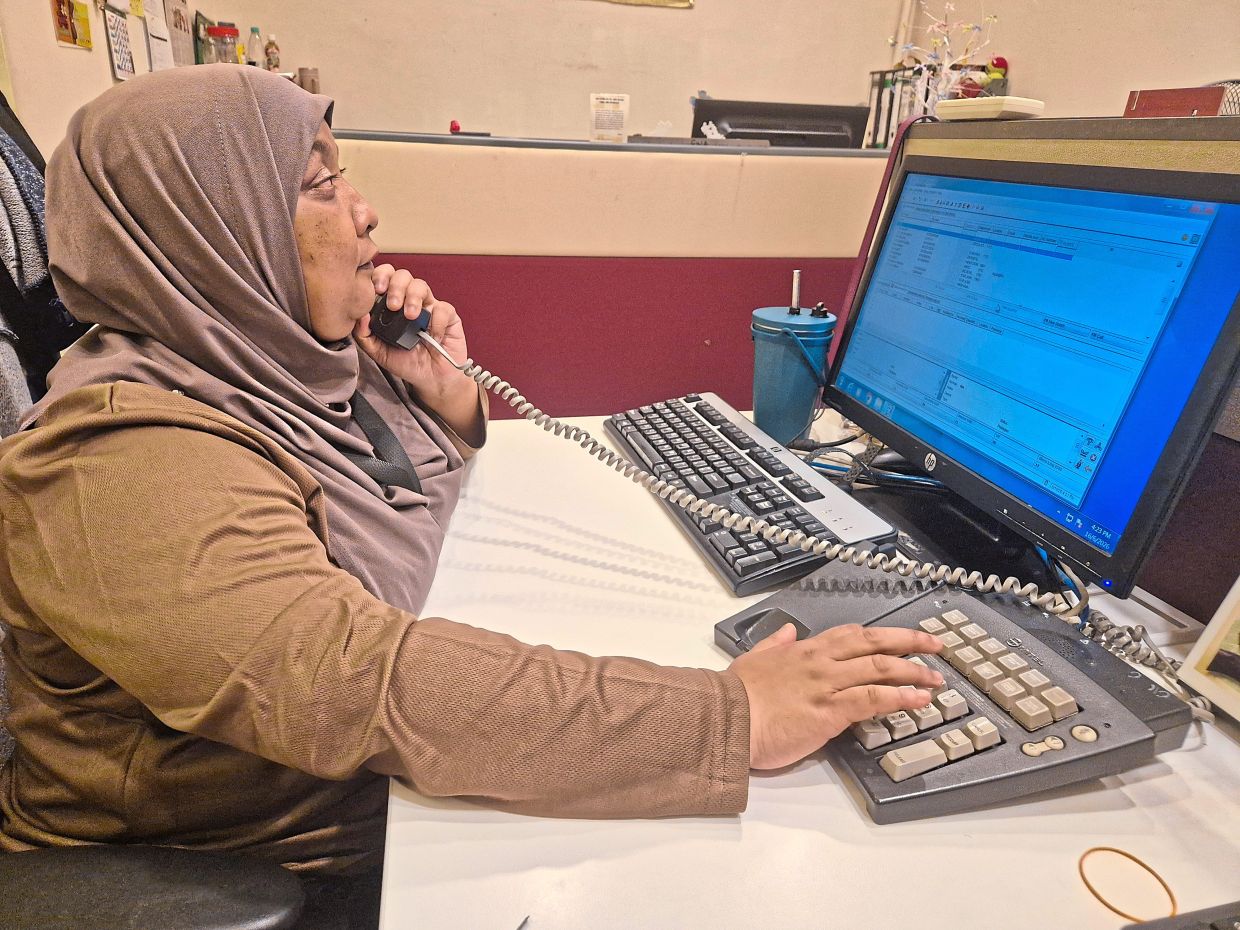
Image courtesy of thestar.com.my